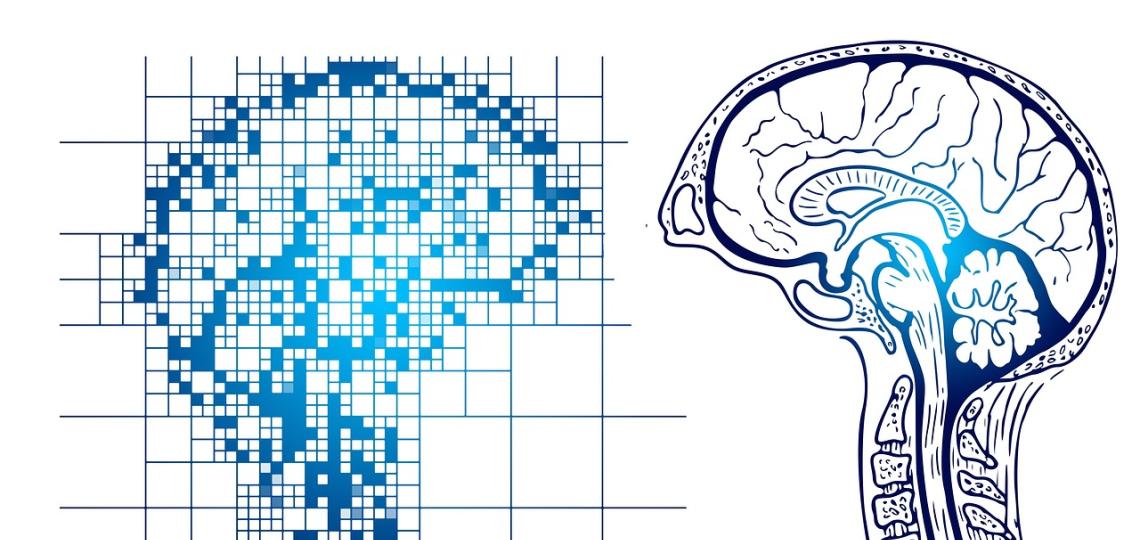
Researchers have developed an artificial intelligence (AI) approach that accelerates the identification of genes that contribute to neurodevelopmental conditions such as autism spectrum disorder, epilepsy and developmental delay. This new powerful computational tool can help fully characterize the genetic landscape of neurodevelopmental disorders, which is key to making accurate molecular diagnosis, elucidating disease mechanism and developing targeted therapies. The study appeared in the American Journal of Human Genetics.
“Although researchers have made major strides identifying different genes associated with neurodevelopmental disorders, many patients with these conditions still do not receive a genetic diagnosis, indicating that there are many more genes waiting to be discovered,” said first and co-corresponding author Dr. Ryan S. Dhindsa, assistant professor of pathology and immunology at Baylor College of Medicine and principal investigator at the Jan and Dan Duncan Neurological Research Institute at Texas Children’s Hospital.
Typically, to discover new genes associated with a disease, researchers sequence the genomes of many individuals with the disorders and compare them to the genomes of people without the disorders. “We took a complementary approach,” Dhindsa said. “We used AI to find patterns among genes already linked to neurodevelopmental diseases and predict additional genes that might also be involved in these disorders.”
The researchers looked for patterns in gene expression measured at the single-cell level from the developing human brain.
“We found that AI models trained solely on these expression data can robustly predict genes implicated in autism spectrum disorder, developmental delay and epilepsy. But we wanted to take this work a step further,” Dhindsa said.
To enhance the models even further, the team incorporated more than 300 other biological features, including measures of how intolerant genes are to mutations, whether they interact with other known disease-associated genes and their functional roles in different biological pathways.
“These models have exceptionally high predictive value,” Dhindsa said. “Top-ranked genes were up to two-fold or six-fold, depending on the mode of inheritance, more enriched for high-confidence neurodevelopmental disorder risk genes compared to genic intolerance metrics alone. Additionally, some top-ranking genes were 45 to 500 times more likely to be supported by the literature than lower ranking genes.”
“We see these models as analytical tools that can validate genes that are beginning to emerge from sequencing studies but don’t yet have enough statistical proof of being involved in neurodevelopmental conditions,” Dhindsa said. “We hope that our models will accelerate gene discovery and patient diagnoses, and future studies will assess this possibility.”
Source –Baylor College of Medicine


Researchers have developed an artificial intelligence (AI) approach that accelerates the identification of genes that contribute to neurodevelopmental conditions such as autism spectrum disorder, epilepsy and developmental delay. This new powerful computational tool can help fully characterize the genetic landscape of neurodevelopmental disorders, which is key to making accurate molecular diagnosis, elucidating disease mechanism and developing targeted therapies. The study appeared in the American Journal of Human Genetics.
Typically, to discover new genes associated with a disease, researchers sequence the genomes of many individuals with the disorders and compare them to the genomes of people without the disorders. “We took a complementary approach,” Dhindsa said. “We used AI to find patterns among genes already linked to neurodevelopmental diseases and predict additional genes that might also be involved in these disorders.”
The researchers looked for patterns in gene expression measured at the single-cell level from the developing human brain.
To enhance the models even further, the team incorporated more than 300 other biological features, including measures of how intolerant genes are to mutations, whether they interact with other known disease-associated genes and their functional roles in different biological pathways.
Source –Baylor College of Medicine
Dhindsa R S, Weido B A, Dhindsa J S, Shetty A J, Sands C F, Petrovski S, Vitsios D, Zoghbi A W. (2025) Genome-wide prediction of dominant and recessive neurodevelopmental disorder-associated genes. Am J Hum Genet 19:S0002-9297(25)00048-5. [article]
Related Posts
Novel biosensor uses DNA ‘barcodes’ to uncover disease signals in cells
CellART extracts single-cell information from high-resolution spatial transcriptomics
Cell2space restores spatial context to single-cell RNA sequencing data
Urine test may improve bladder cancer diagnosis and guide treatment decisions
DeCoRE – a computational method to resolve RNA structural heterogeneity from RNA structure probing data by direct RNA sequencing
Tracing 700 million years of cell evolution
How should biological replicates be handled in long-read RNA sequencing?
RNA-Seq reveals a new way the developing heart controls its growth
The Human RNome Project Consortium seeks to publish first-ever complete sequence of the body’s RNA
scFlowReport brings multiple single-cell RNA sequencing analyses into one workflow
Long-read RNA sequencing reveals how neurons choose alternative RNA endings
DeOPUS improves cell-type estimates from bulk RNA sequencing
ResolVI improves accuracy in spatial transcriptomics analysis
RNA sequencing reveals transcriptional allele differences in prostate cancer stem cells
Unmasking “zombie cells” in aging tissue with an AI-powered barcode
RNA variant imaging for cancer diagnosis
Autism-risk mutations reveal two opposing patterns of brain gene activity
A real-data approach to evaluating RNA transcript analysis methods
Detection and sequencing of Ap2N-capped RNAs in human cells
Single-cell RNA sequencing provides a closer look at the Aedes aegypti midgut
Stay Connected
Submit a Post to the Blog
Recent Posts
Subscribe to the RNA-Seq Blog
RNA-Seq Products & Services