A new approach that keeps blood cells alive in deep freeze promises to expand reach of cutting-edge single-cell technologies to underserved populations.
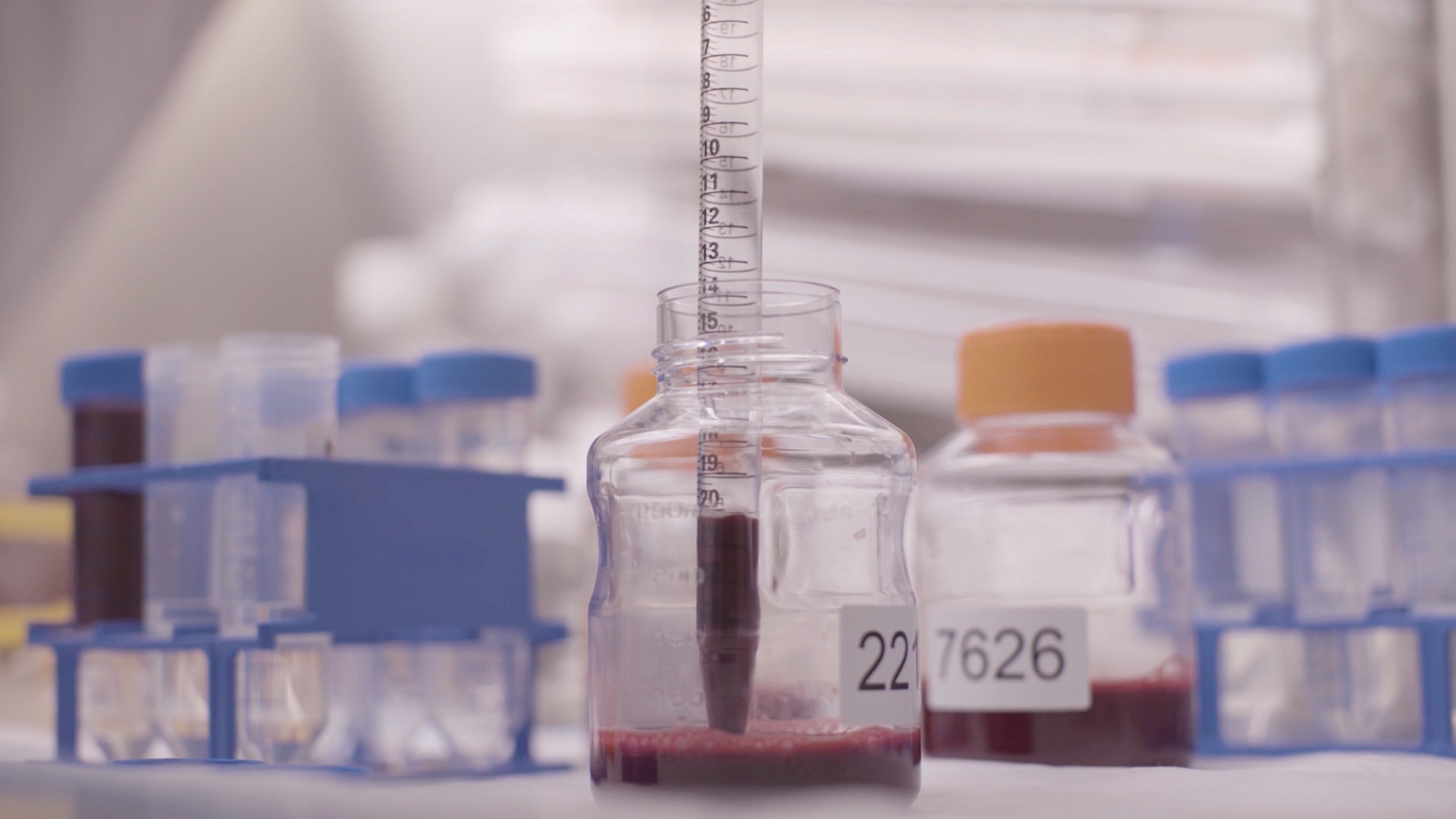
Your blood is a delicate mixture. Researchers and clinicians often use blood to learn what’s going on inside our bodies, in part because siphoning off a tube of blood is easier and less painful than taking biopsies of an internal organ.
But in some cases, it turns out that blood can be very different outside our bodies. When it comes to certain emerging research techniques, the clock starts ticking as soon as your blood hits the tube. As little as six to eight hours later, some aspects of your blood’s molecular composition will have changed to the point that an experiment would give completely different results.
If a patient or research study volunteer is having a blood draw at or near a research facility that can perform this type of experiment on site, that time delay doesn’t come into play. But for research studies or clinical trials that hope to enroll patients and volunteers in rural areas or draw blood at clinics without an attached high-tech laboratory, rushing the blood samples to the processing site becomes a problem. Most clinical sample collection occurs near major research hubs, limiting our understanding of underserved and socio-economically deprived communities.
A new approach, called CryoSCAPE, developed by researchers at the Allen Institute for Immunology, a division of the Allen Institute, aims to stop that clock and lower experiment costs to broaden the reach and utility of these cutting-edge technologies for blood draws. The method uses a simple chemical mixture, pre-packaged in a small tube, to put blood into a type of suspended animation, protecting it from damage during freezing and preserving its delicate molecules in their natural state.
This new, scalable immune profiling technology is described in a recently published study in the Journal of Translational Medicine.
“Virtually all clinical trials run by biopharmaceutical companies will collect blood at one site but then they have to ship the blood overnight to a centralized processing site,” said Peter Skene, Ph.D., director of high resolution translational immunology at the Allen Institute for Immunology, who is one of the developers of this new approach. “We wanted to solve this problem by developing a methodology that allows immediate blood stabilization at the bedside.”
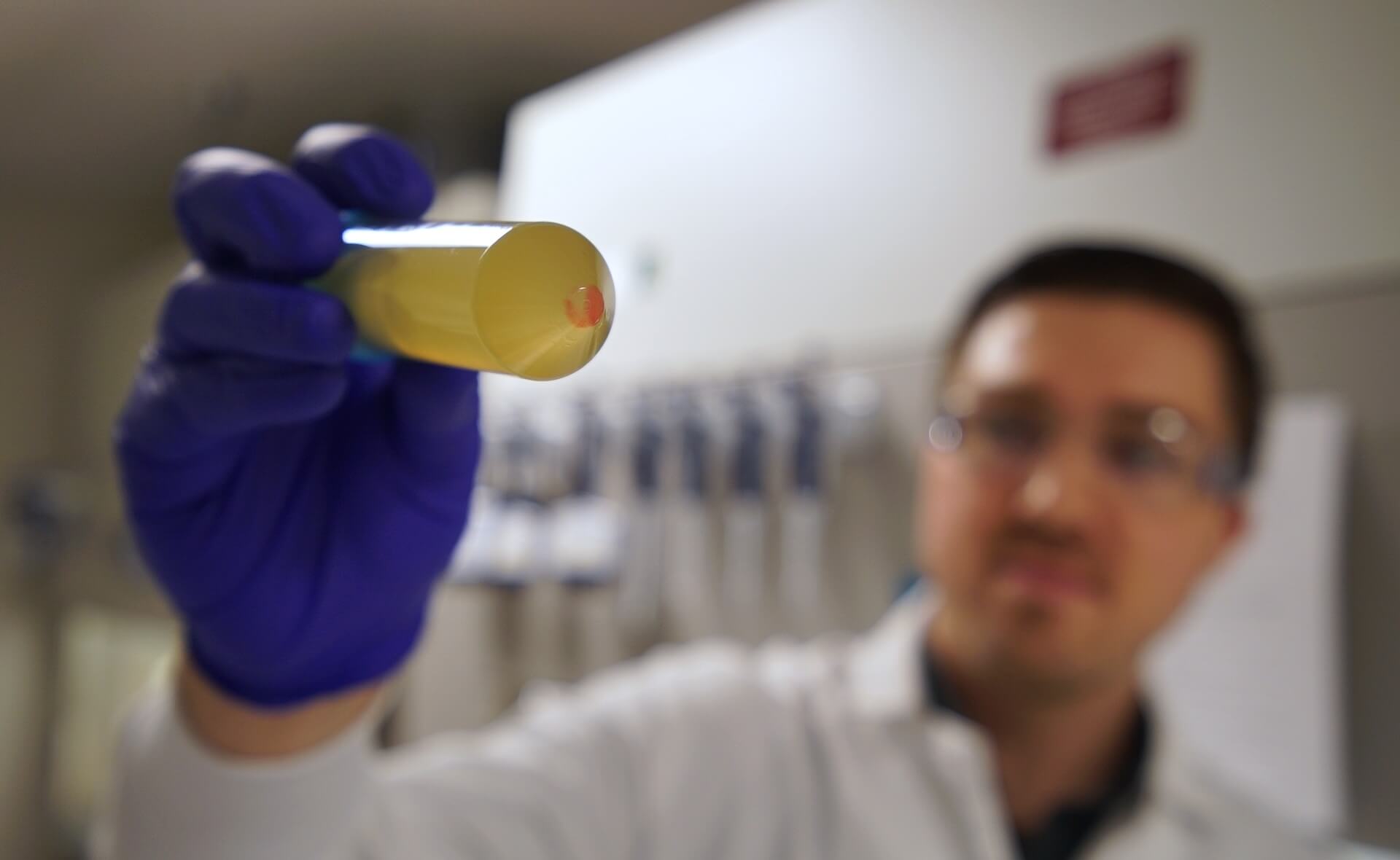
Alex Heubeck, M.S., B.S., researcher at the Allen Institute for Immunology and lead author of the study, works with blood samples in the lab.
The approach aims to broaden the reach of a class of experiments known as single-cell technologies, which capture the exact molecular composition of thousands or more of a patient’s individual cells one cell at a time. As these single-cell methods increase in use in the research world and ultimately make their way to clinical use, a blood stabilization technique like this could help increase the accuracy of experimental results and bring single-cell methods to research in diverse human populations.
“This technique allows you to, in a way, keep the sample at the stage it was when the patient first gave blood,” said Lisa Forbes Satter, M.D., an immunologist and pediatrician at Baylor College of Medicine and Texas Children’s Hospital who collaborates with researchers at the Allen Institute to study rare immune-deficiency disorders. “It would be a game changer for institutions and clinics that don’t have a lot of resources.”
The most common of the emerging single-cell technologies is known as single-cell RNA sequencing, a technique that reads out the genes switched on or off in a cell by capturing information about each individual cell’s full suite of RNA molecules. RNA is particularly finicky: The Allen Institute team found that just six hours after blood collection, RNA sequencing data are completely different from those in cells analyzed right after a blood draw. But this new way of stabilizing blood could be useful for other applications too, its creators say, because it keeps the cells alive and close to their natural state in the body.
The Allen Institute team’s approach also scales up the single-cell experiments to the point that they can now process hundreds of blood samples at once. The technology could be used to broaden the reach of immunology studies at the Allen Institute and elsewhere, Skene said. The method would lower the barriers to participating in research studies because blood could be drawn at neighborhood clinics or pop-up sites, eliminating the need for volunteers to travel to a research laboratory. Skene and his colleagues hope these lowered barriers could lead to increased enrollment of members of underserved communities in research studies and clinical trials. The team also plans to use the approach to help streamline and expand clinical trials conducted by biopharmaceutical companies, those that typically need to ship blood samples to a centralized lab for analysis.
“As a team, we’ve developed a lot of exciting but complicated new approaches, but we also need to make these approaches accessible,” said Julian Reading, senior manager of flow cytometry at the Allen Institute for Immunology. “Now we’re working to open access to this technology, to get to a point where we can actually have broader impact.”
Source – The Allen Institute


A new approach that keeps blood cells alive in deep freeze promises to expand reach of cutting-edge single-cell technologies to underserved populations.
Your blood is a delicate mixture. Researchers and clinicians often use blood to learn what’s going on inside our bodies, in part because siphoning off a tube of blood is easier and less painful than taking biopsies of an internal organ.
But in some cases, it turns out that blood can be very different outside our bodies. When it comes to certain emerging research techniques, the clock starts ticking as soon as your blood hits the tube. As little as six to eight hours later, some aspects of your blood’s molecular composition will have changed to the point that an experiment would give completely different results.
If a patient or research study volunteer is having a blood draw at or near a research facility that can perform this type of experiment on site, that time delay doesn’t come into play. But for research studies or clinical trials that hope to enroll patients and volunteers in rural areas or draw blood at clinics without an attached high-tech laboratory, rushing the blood samples to the processing site becomes a problem. Most clinical sample collection occurs near major research hubs, limiting our understanding of underserved and socio-economically deprived communities.
A new approach, called CryoSCAPE, developed by researchers at the Allen Institute for Immunology, a division of the Allen Institute, aims to stop that clock and lower experiment costs to broaden the reach and utility of these cutting-edge technologies for blood draws. The method uses a simple chemical mixture, pre-packaged in a small tube, to put blood into a type of suspended animation, protecting it from damage during freezing and preserving its delicate molecules in their natural state.
This new, scalable immune profiling technology is described in a recently published study in the Journal of Translational Medicine.
Alex Heubeck, M.S., B.S., researcher at the Allen Institute for Immunology and lead author of the study, works with blood samples in the lab.
The approach aims to broaden the reach of a class of experiments known as single-cell technologies, which capture the exact molecular composition of thousands or more of a patient’s individual cells one cell at a time. As these single-cell methods increase in use in the research world and ultimately make their way to clinical use, a blood stabilization technique like this could help increase the accuracy of experimental results and bring single-cell methods to research in diverse human populations.
The most common of the emerging single-cell technologies is known as single-cell RNA sequencing, a technique that reads out the genes switched on or off in a cell by capturing information about each individual cell’s full suite of RNA molecules. RNA is particularly finicky: The Allen Institute team found that just six hours after blood collection, RNA sequencing data are completely different from those in cells analyzed right after a blood draw. But this new way of stabilizing blood could be useful for other applications too, its creators say, because it keeps the cells alive and close to their natural state in the body.
The Allen Institute team’s approach also scales up the single-cell experiments to the point that they can now process hundreds of blood samples at once. The technology could be used to broaden the reach of immunology studies at the Allen Institute and elsewhere, Skene said. The method would lower the barriers to participating in research studies because blood could be drawn at neighborhood clinics or pop-up sites, eliminating the need for volunteers to travel to a research laboratory. Skene and his colleagues hope these lowered barriers could lead to increased enrollment of members of underserved communities in research studies and clinical trials. The team also plans to use the approach to help streamline and expand clinical trials conducted by biopharmaceutical companies, those that typically need to ship blood samples to a centralized lab for analysis.
Source – The Allen Institute
Heubeck AT, Phalen C, Kaul N, Wittig PJ, Garber J, Weiss M, Genge PC, Thomson Z, Gustafson C, Reading J, Skene PJ. (2025) CryoSCAPE: Scalable immune profiling using cryopreserved whole blood for multi-omic single cell and functional assays. J Transl Med 23(1):5. [article]
Related Posts
RNAmel simplifies RNA sequencing data analysis with a reproducible, integrated platform
Heart failure reshapes bone marrow to create inflammation-related immune memory
Overlooked DNA regions surrounding ‘microexons’ hold missing pieces of autism’s genetic puzzle
RiboBA improves detection of hidden protein-coding regions using ribosome profiling
An anti-senescence gene may fight spinal disc deterioration
Scientists identify the neuroblastoma cells that signal poor outcomes
Novel biosensor uses DNA ‘barcodes’ to uncover disease signals in cells
CellART extracts single-cell information from high-resolution spatial transcriptomics
Cell2space restores spatial context to single-cell RNA sequencing data
Urine test may improve bladder cancer diagnosis and guide treatment decisions
DeCoRE – a computational method to resolve RNA structural heterogeneity from RNA structure probing data by direct RNA sequencing
Tracing 700 million years of cell evolution
How should biological replicates be handled in long-read RNA sequencing?
RNA-Seq reveals a new way the developing heart controls its growth
The Human RNome Project Consortium seeks to publish first-ever complete sequence of the body’s RNA
scFlowReport brings multiple single-cell RNA sequencing analyses into one workflow
Long-read RNA sequencing reveals how neurons choose alternative RNA endings
DeOPUS improves cell-type estimates from bulk RNA sequencing
ResolVI improves accuracy in spatial transcriptomics analysis
RNA sequencing reveals transcriptional allele differences in prostate cancer stem cells
Stay Connected
Submit a Post to the Blog
Recent Posts
Subscribe to the RNA-Seq Blog
RNA-Seq Products & Services