

Neuroblastoma is one of the most common solid cancers in children, and it frequently spreads to the bone marrow. Once cancer cells reach the bone marrow, they interact with many different immune cells and alter the local environment, making it more difficult for the body’s natural defenses to eliminate the tumor. Understanding these interactions is important for developing more effective immunotherapies.
Researchers from the Città della Speranza Foundation, Italy used single-cell RNA sequencing to examine metastatic bone marrow samples collected from children with neuroblastoma at the time of diagnosis. By comparing these results with bulk RNA sequencing data, they created a detailed picture of both the tumor cells and the surrounding immune cells within the bone marrow.
Single-cell RNA sequencing allows researchers to analyze individual cells instead of averaging signals across an entire tissue sample. This approach revealed that the bone marrow environment in patients with neuroblastoma differs substantially from healthy bone marrow.
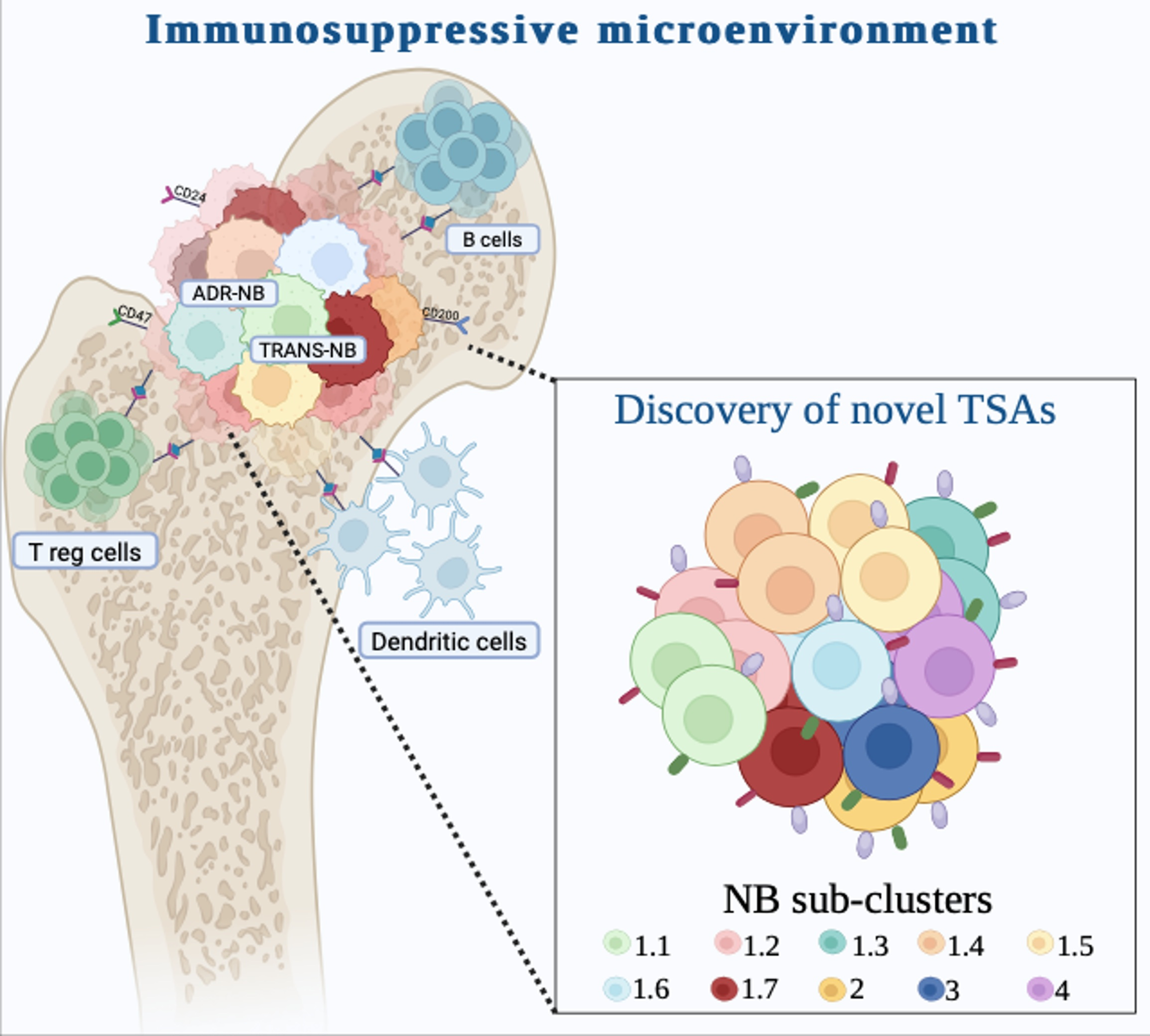
One of the most important findings was an increase in regulatory T cells, immune cells that normally help prevent excessive immune responses. In cancer, however, these cells can suppress anti-tumor immunity, allowing cancer cells to survive more easily.
The researchers also found increased activity of several so called “don’t eat me” signals, including CD24, CD47, and CD200. These molecules help cancer cells avoid being engulfed and destroyed by immune cells such as macrophages. Their presence suggests that neuroblastoma actively modifies the immune environment to protect itself from immune attack.
Using computational analysis, the researchers identified extensive communication between neuroblastoma cells and myeloid immune cells through amyloid precursor protein (APP) and midkine (MK) signaling pathways. These signaling networks may contribute to tumor growth and immune suppression within the bone marrow.
Analysis of the tumor cells also revealed that neuroblastoma exists in multiple cellular states. The researchers identified both adrenergic and transitory tumor cell populations, along with ten distinct tumor subclusters. This diversity highlights why neuroblastoma can be difficult to treat, as different groups of cancer cells may respond differently to therapy.
Finally, the researchers searched for proteins found specifically on neuroblastoma cells that could serve as future immunotherapy targets. Two molecules, CNTFR and CHRNA3, emerged as particularly promising because they were highly selective for tumor cells while showing limited expression elsewhere.
As RNA sequencing technologies continue to improve, combining single-cell RNA sequencing with bulk RNA sequencing is providing a much clearer understanding of how tumors interact with their surrounding environment. These insights could guide the development of more precise immunotherapies and identify new targets for treating metastatic neuroblastoma.
Aveic S, Davini A, Menegazzo S, Pantile M, Zanon C, Corrà A, Faggin G, Corallo D, Pellin D, Santoro L, Frasson C, Zin A, Francescato S, Rossi B, Neculaescu IA, Pigazzi M, Buldini B, Viscardi E, Biffi A. (2026) Comparative Study of Single-Cell and Bulk RNA Sequencing Data from Metastatic Bone Marrow Neuroblastoma Samples. Cells 15(13):1139. [article]
Related Posts






Neuroblastoma is one of the most common solid cancers in children, and it frequently spreads to the bone marrow. Once cancer cells reach the bone marrow, they interact with many different immune cells and alter the local environment, making it more difficult for the body’s natural defenses to eliminate the tumor. Understanding these interactions is important for developing more effective immunotherapies.
Researchers from the Città della Speranza Foundation, Italy used single-cell RNA sequencing to examine metastatic bone marrow samples collected from children with neuroblastoma at the time of diagnosis. By comparing these results with bulk RNA sequencing data, they created a detailed picture of both the tumor cells and the surrounding immune cells within the bone marrow.
Single-cell RNA sequencing allows researchers to analyze individual cells instead of averaging signals across an entire tissue sample. This approach revealed that the bone marrow environment in patients with neuroblastoma differs substantially from healthy bone marrow.
One of the most important findings was an increase in regulatory T cells, immune cells that normally help prevent excessive immune responses. In cancer, however, these cells can suppress anti-tumor immunity, allowing cancer cells to survive more easily.
The researchers also found increased activity of several so called “don’t eat me” signals, including CD24, CD47, and CD200. These molecules help cancer cells avoid being engulfed and destroyed by immune cells such as macrophages. Their presence suggests that neuroblastoma actively modifies the immune environment to protect itself from immune attack.
Using computational analysis, the researchers identified extensive communication between neuroblastoma cells and myeloid immune cells through amyloid precursor protein (APP) and midkine (MK) signaling pathways. These signaling networks may contribute to tumor growth and immune suppression within the bone marrow.
Analysis of the tumor cells also revealed that neuroblastoma exists in multiple cellular states. The researchers identified both adrenergic and transitory tumor cell populations, along with ten distinct tumor subclusters. This diversity highlights why neuroblastoma can be difficult to treat, as different groups of cancer cells may respond differently to therapy.
Finally, the researchers searched for proteins found specifically on neuroblastoma cells that could serve as future immunotherapy targets. Two molecules, CNTFR and CHRNA3, emerged as particularly promising because they were highly selective for tumor cells while showing limited expression elsewhere.
As RNA sequencing technologies continue to improve, combining single-cell RNA sequencing with bulk RNA sequencing is providing a much clearer understanding of how tumors interact with their surrounding environment. These insights could guide the development of more precise immunotherapies and identify new targets for treating metastatic neuroblastoma.
Aveic S, Davini A, Menegazzo S, Pantile M, Zanon C, Corrà A, Faggin G, Corallo D, Pellin D, Santoro L, Frasson C, Zin A, Francescato S, Rossi B, Neculaescu IA, Pigazzi M, Buldini B, Viscardi E, Biffi A. (2026) Comparative Study of Single-Cell and Bulk RNA Sequencing Data from Metastatic Bone Marrow Neuroblastoma Samples. Cells 15(13):1139. [article]
Related Posts
Recent Posts
 Novel biosensor uses DNA ‘barcodes’ to uncover disease signals in cells
 GP-DHT uses single-cell RNA sequencing to map gene regulatory networks
 Boehringer taps Envisagenics’ AI to mine RNA splicing for cancer targets
 CellART extracts single-cell information from high-resolution spatial transcriptomics
 Cell2space restores spatial context to single-cell RNA sequencing data
 PacBio and TychoBio Collaborate to Train AI Models for Rare Disease
RNA-Seq Products & Services


Stay Connected