

Genetic mutations are at the root of many diseases, including cancer. One particularly important type of mutation is the formation of fusion proteins, which occur when parts of two different genes combine abnormally. These fusion proteins can drive cancer growth by disrupting normal cellular functions. Identifying these genetic alterations is crucial for understanding cancer progression and developing targeted therapies.
Traditionally, detecting fusion genes has relied on whole-genome sequencing (WGS), which examines the entire DNA sequence of a cell. While WGS is a powerful tool, it can be expensive and time-consuming, making it difficult to use for routine testing. Additionally, not all structural changes in the genome are harmful—some are simply variations that naturally occur between individuals. This makes it challenging to pinpoint which mutations are truly driving disease.
RNA Sequencing: A More Efficient Approach
RNA sequencing (RNA-Seq) offers a faster and more cost-effective alternative for detecting functionally relevant mutations, such as gene fusions. Instead of analyzing the entire genome, RNA-Seq focuses on the active genes, providing insight into which genetic changes are actually affecting cellular function. This method is particularly useful for detecting fusion transcripts, where parts of two different genes are mistakenly joined together in the RNA, leading to the production of abnormal proteins.
With RNA-Seq, researchers can identify gene fusions more efficiently by analyzing which genes are being overexpressed—meaning they are producing an unusually high amount of RNA, which can indicate cancer-related activity. This approach helps researchers and clinicians pinpoint genetic changes that are most likely contributing to disease progression.
A Pipeline for Fusion Detection
To effectively detect fusion genes using RNA-Seq, researchers follow a structured analysis pipeline that includes:
- Data Collection – Sequencing RNA from cancerous and normal cells to compare gene expression.
- Quality Control – Filtering out errors and low-quality reads to ensure accurate results.
- Fusion Detection Algorithms – Using specialized bioinformatics tools to scan for gene fusions.
- Validation – Confirming the detected fusions to distinguish between disease-related mutations and harmless variations.
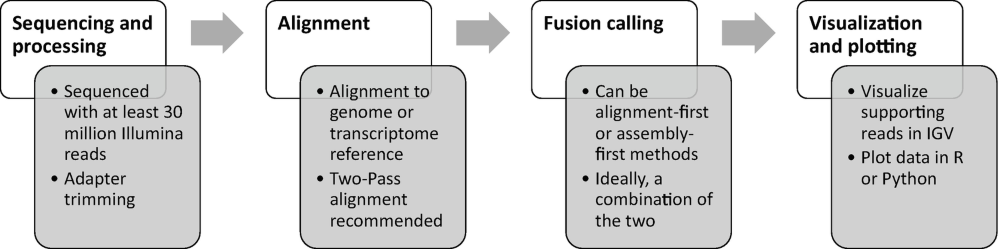
By following this pipeline, scientists can efficiently identify gene fusions that contribute to cancer, paving the way for better diagnostics and potential treatments.
RNA-Seq is becoming an essential tool in cancer research, helping to identify new drug targets and improve personalized medicine approaches. By detecting fusion genes more easily and affordably, researchers can develop more precise treatments that target the genetic drivers of cancer. As technology advances, RNA-Seq is likely to play an even bigger role in understanding and treating a variety of diseases beyond cancer.
Fusion gene detection is just one example of how RNA-Seq is reshaping modern genomics—making it easier to uncover the molecular secrets of disease and move toward more effective treatments.
Zwaig M, Darmond C, Arseneault M, Riazalhosseini Y, Ragoussis J. (2025) Fusion Transcript Detection from Short-Read RNA-Seq. Methods Mol Biol 2880:159-177. [article]
Related Posts




Genetic mutations are at the root of many diseases, including cancer. One particularly important type of mutation is the formation of fusion proteins, which occur when parts of two different genes combine abnormally. These fusion proteins can drive cancer growth by disrupting normal cellular functions. Identifying these genetic alterations is crucial for understanding cancer progression and developing targeted therapies.
Traditionally, detecting fusion genes has relied on whole-genome sequencing (WGS), which examines the entire DNA sequence of a cell. While WGS is a powerful tool, it can be expensive and time-consuming, making it difficult to use for routine testing. Additionally, not all structural changes in the genome are harmful—some are simply variations that naturally occur between individuals. This makes it challenging to pinpoint which mutations are truly driving disease.
RNA Sequencing: A More Efficient Approach
RNA sequencing (RNA-Seq) offers a faster and more cost-effective alternative for detecting functionally relevant mutations, such as gene fusions. Instead of analyzing the entire genome, RNA-Seq focuses on the active genes, providing insight into which genetic changes are actually affecting cellular function. This method is particularly useful for detecting fusion transcripts, where parts of two different genes are mistakenly joined together in the RNA, leading to the production of abnormal proteins.
With RNA-Seq, researchers can identify gene fusions more efficiently by analyzing which genes are being overexpressed—meaning they are producing an unusually high amount of RNA, which can indicate cancer-related activity. This approach helps researchers and clinicians pinpoint genetic changes that are most likely contributing to disease progression.
A Pipeline for Fusion Detection
To effectively detect fusion genes using RNA-Seq, researchers follow a structured analysis pipeline that includes:
- Data Collection – Sequencing RNA from cancerous and normal cells to compare gene expression.
- Quality Control – Filtering out errors and low-quality reads to ensure accurate results.
- Fusion Detection Algorithms – Using specialized bioinformatics tools to scan for gene fusions.
- Validation – Confirming the detected fusions to distinguish between disease-related mutations and harmless variations.
By following this pipeline, scientists can efficiently identify gene fusions that contribute to cancer, paving the way for better diagnostics and potential treatments.
RNA-Seq is becoming an essential tool in cancer research, helping to identify new drug targets and improve personalized medicine approaches. By detecting fusion genes more easily and affordably, researchers can develop more precise treatments that target the genetic drivers of cancer. As technology advances, RNA-Seq is likely to play an even bigger role in understanding and treating a variety of diseases beyond cancer.
Fusion gene detection is just one example of how RNA-Seq is reshaping modern genomics—making it easier to uncover the molecular secrets of disease and move toward more effective treatments.
Zwaig M, Darmond C, Arseneault M, Riazalhosseini Y, Ragoussis J. (2025) Fusion Transcript Detection from Short-Read RNA-Seq. Methods Mol Biol 2880:159-177. [article]
Related Posts
Recent Posts
 Machine learning reveals how RNA splicing is regulated in individual cell types
 Illumina releases SpliceAI2 to help advance rare disease research
 Postdoctoral Fellow – Long-Read RNA Methods Development for Neurodegeneration
 Novel biosensor uses DNA ‘barcodes’ to uncover disease signals in cells
 GP-DHT uses single-cell RNA sequencing to map gene regulatory networks
 Boehringer taps Envisagenics’ AI to mine RNA splicing for cancer targets
RNA-Seq Products & Services


Stay Connected