

Many genetic diseases are caused by small changes in DNA that disrupt how genes are processed into RNA. One important step in this process is called RNA splicing. During splicing, segments of RNA called introns are removed and the remaining pieces called exons are joined together to produce a mature RNA molecule that can be translated into protein.
When splicing goes wrong, the resulting RNA molecules can be incomplete or altered in ways that lead to disease. Researchers estimate that roughly one third of disease causing genetic variants disrupt RNA splicing. However, many of these variants are still missing from clinical databases because they are difficult to detect using traditional genetic testing.
RNA sequencing has become an important tool for studying these types of variants. By sequencing RNA molecules directly, scientists can observe how genes are actually expressed and processed inside cells. This makes RNA sequencing especially useful for detecting abnormal splicing patterns that may not be obvious when only DNA is analyzed.
Researchers University of Southampton, UK explored whether a newer form of RNA sequencing could improve detection of disease related splicing events. The team compared traditional short read RNA sequencing with long read RNA sequencing performed using PacBio technology.
Short read sequencing analyzes RNA by breaking it into many small fragments that are later reconstructed computationally. While powerful, this approach can make it difficult to determine how full length RNA molecules are assembled, especially when complex splicing patterns are involved.
Long read RNA sequencing takes a different approach. Instead of sequencing small fragments, it reads much longer stretches of RNA in a single pass. This allows researchers to observe entire RNA transcripts and identify exactly how exons are combined.
In the study, the researchers analyzed samples from 25 individuals in the United Kingdom and the Netherlands who were suspected of carrying genetic variants that affect splicing. Using PacBio long read RNA sequencing, they examined RNA molecules derived from blood and fibroblast cells.
Characterisation of transcript diversity
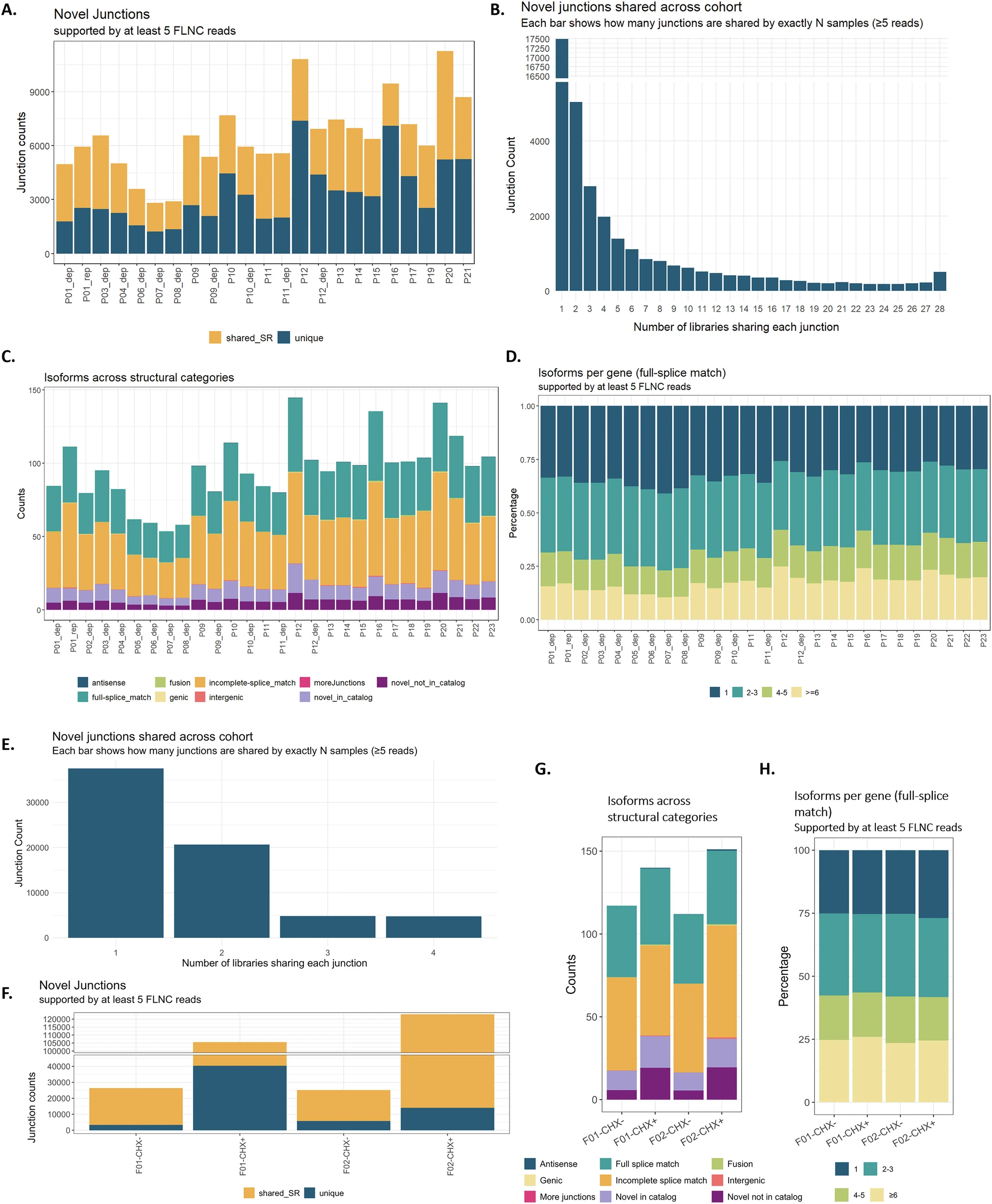
A Fraction of novel junctions (supported by at least 5 FLNC reads) supported by paired short-read data in blood. Orange shows the number of junctions present in short reads (chr:start:end identical in both datasets). B Novel junctions shared across blood libraries. Each bar shows how many junctions are shared by exactly N libraries (supported by at least 5 FLNC reads). 17,846 junctions unique to a single library, and 508 junctions are shared across all 28. C Isoform distribution across structural categories in blood samples. D Isoform count per gene in blood libraries. Calculation includes only full-splice match isoforms and only those supported by at least 5 FLNC reads. E Novel junctions shared across fibroblast libraries. Each bar shows how many junctions are shared by exactly N libraries (supported by at least 5 FLNC reads). F Fraction of novel junctions (supported by at least 5 FLNC reads) supported by paired short-read data in fibroblasts. Orange shows the number of junctions present in short reads (chr:start:end identical in both datasets). G Distribution of isoforms across structural categories in CHX- and CHX+ fibroblasts. H Isoform count per gene in CHX- and CHX+ fibroblasts. Calculation includes only full-splice match isoforms and only those supported by at least 5 FLNC reads. CHX cycloheximide.
The results showed that long read RNA sequencing detected disease related genes at rates similar to short read sequencing. However, the long read method provided additional insights into how RNA molecules were structured.
The researchers found that about 14 percent of the detected RNA transcripts represented previously unknown isoforms. Isoforms are different versions of RNA produced from the same gene through alternative splicing.
Long read RNA sequencing also revealed several complex splicing abnormalities that are difficult to detect using short read methods. These included intron retention, where segments of RNA that should be removed remain in the final transcript, multiple exon skipping events, and situations where different RNA isoforms were produced depending on the presence of genetic variants.
In several cases, the technology also allowed scientists to determine how specific variants were phased within the same RNA molecule. This information can help researchers understand how combinations of variants influence gene expression and disease.
Overall, the results suggest that long read RNA sequencing can provide a more detailed view of RNA splicing patterns and help clarify how genetic variants disrupt gene function. Integrating this approach into clinical workflows could improve the diagnosis of rare genetic disorders that are caused by splicing defects.
As RNA sequencing technologies continue to improve, they are becoming increasingly important tools for understanding how genetic variation affects RNA processing and ultimately human disease.
Jaramillo Oquendo C, Ferraro F, Wai HA, Ferrao H, van der Linde H, Karelioti E, Tseng L, Dhillon H, Holt S, Bunyan DJ, Donker Kaat L, van Dooren M, Zhou J, Ennis S, Holloway JW, van Ham TJ, Baralle D. (2026) HiFi long-read RNA sequencing enhances clinical diagnostics in rare disorders. European Journal of Human Genetics [Epub ahead of print]. [article]
Related Posts






Many genetic diseases are caused by small changes in DNA that disrupt how genes are processed into RNA. One important step in this process is called RNA splicing. During splicing, segments of RNA called introns are removed and the remaining pieces called exons are joined together to produce a mature RNA molecule that can be translated into protein.
When splicing goes wrong, the resulting RNA molecules can be incomplete or altered in ways that lead to disease. Researchers estimate that roughly one third of disease causing genetic variants disrupt RNA splicing. However, many of these variants are still missing from clinical databases because they are difficult to detect using traditional genetic testing.
RNA sequencing has become an important tool for studying these types of variants. By sequencing RNA molecules directly, scientists can observe how genes are actually expressed and processed inside cells. This makes RNA sequencing especially useful for detecting abnormal splicing patterns that may not be obvious when only DNA is analyzed.
Researchers University of Southampton, UK explored whether a newer form of RNA sequencing could improve detection of disease related splicing events. The team compared traditional short read RNA sequencing with long read RNA sequencing performed using PacBio technology.
Short read sequencing analyzes RNA by breaking it into many small fragments that are later reconstructed computationally. While powerful, this approach can make it difficult to determine how full length RNA molecules are assembled, especially when complex splicing patterns are involved.
Long read RNA sequencing takes a different approach. Instead of sequencing small fragments, it reads much longer stretches of RNA in a single pass. This allows researchers to observe entire RNA transcripts and identify exactly how exons are combined.
In the study, the researchers analyzed samples from 25 individuals in the United Kingdom and the Netherlands who were suspected of carrying genetic variants that affect splicing. Using PacBio long read RNA sequencing, they examined RNA molecules derived from blood and fibroblast cells.
Characterisation of transcript diversity
A Fraction of novel junctions (supported by at least 5 FLNC reads) supported by paired short-read data in blood. Orange shows the number of junctions present in short reads (chr:start:end identical in both datasets). B Novel junctions shared across blood libraries. Each bar shows how many junctions are shared by exactly N libraries (supported by at least 5 FLNC reads). 17,846 junctions unique to a single library, and 508 junctions are shared across all 28. C Isoform distribution across structural categories in blood samples. D Isoform count per gene in blood libraries. Calculation includes only full-splice match isoforms and only those supported by at least 5 FLNC reads. E Novel junctions shared across fibroblast libraries. Each bar shows how many junctions are shared by exactly N libraries (supported by at least 5 FLNC reads). F Fraction of novel junctions (supported by at least 5 FLNC reads) supported by paired short-read data in fibroblasts. Orange shows the number of junctions present in short reads (chr:start:end identical in both datasets). G Distribution of isoforms across structural categories in CHX- and CHX+ fibroblasts. H Isoform count per gene in CHX- and CHX+ fibroblasts. Calculation includes only full-splice match isoforms and only those supported by at least 5 FLNC reads. CHX cycloheximide.
The results showed that long read RNA sequencing detected disease related genes at rates similar to short read sequencing. However, the long read method provided additional insights into how RNA molecules were structured.
The researchers found that about 14 percent of the detected RNA transcripts represented previously unknown isoforms. Isoforms are different versions of RNA produced from the same gene through alternative splicing.
Long read RNA sequencing also revealed several complex splicing abnormalities that are difficult to detect using short read methods. These included intron retention, where segments of RNA that should be removed remain in the final transcript, multiple exon skipping events, and situations where different RNA isoforms were produced depending on the presence of genetic variants.
In several cases, the technology also allowed scientists to determine how specific variants were phased within the same RNA molecule. This information can help researchers understand how combinations of variants influence gene expression and disease.
Overall, the results suggest that long read RNA sequencing can provide a more detailed view of RNA splicing patterns and help clarify how genetic variants disrupt gene function. Integrating this approach into clinical workflows could improve the diagnosis of rare genetic disorders that are caused by splicing defects.
As RNA sequencing technologies continue to improve, they are becoming increasingly important tools for understanding how genetic variation affects RNA processing and ultimately human disease.
Jaramillo Oquendo C, Ferraro F, Wai HA, Ferrao H, van der Linde H, Karelioti E, Tseng L, Dhillon H, Holt S, Bunyan DJ, Donker Kaat L, van Dooren M, Zhou J, Ennis S, Holloway JW, van Ham TJ, Baralle D. (2026) HiFi long-read RNA sequencing enhances clinical diagnostics in rare disorders. European Journal of Human Genetics [Epub ahead of print]. [article]
Related Posts
Recent Posts
 RNAmel simplifies RNA sequencing data analysis with a reproducible, integrated platform
 Heart failure reshapes bone marrow to create inflammation-related immune memory
 Overlooked DNA regions surrounding ‘microexons’ hold missing pieces of autism’s genetic puzzle
 RiboBA improves detection of hidden protein-coding regions using ribosome profiling
 An anti-senescence gene may fight spinal disc deterioration
 Bulk RNA-seq Analysis: A Complete Beginner’s Guide
RNA-Seq Products & Services



Stay Connected