Researchers from the Ruth and Bruce Rappaport Faculty of Medicine have identified a genetic “fingerprint” that helps predict the effectiveness of these treatments
Considered to be one of the greatest revolutions in cancer treatment, immunotherapy enhances the immune system’s ability to target and destroy cancer cells efficiently. One of the key challenges in immunotherapy is the uncertainty regarding patients’ responses – not all patients respond to the treatment, and some may experience side effects without meaningful therapeutic gain. Therefore, there is a need to identify biomarkers that can predict treatment effectiveness based on individual patient data.
New and promising findings on this topic are now presented in a study by Technion researchers published in the prestigious journal Cell Genomics. The research was led by Prof. Keren Yizhak and Ph.D. student Ofir Shorer from the Rappaport Faculty of Medicine and the Bruce and Ruth Rappaport Cancer Research Center.
Their study is based on a large-scale meta-analysis of single-cell RNA sequencing and T-cell receptor (TCR) sequencing from cancer patients treated with immunotherapy. This allowed them to examine the genetic characteristics of T-cell clones and their influence on treatment success.

Key Terms for Understanding the Research:
- T cells – White blood cells that play a crucial role in identifying and destroying cancer cells, as well as protecting the body from external threats like viruses.
- T cell clones – When T cells recognize a threat, they multiply and form different groups of identical cells specialized in fighting that specific threat.
The researchers discovered that while these T cell clones exist in both responsive and non-responsive patients, those who respond to immunotherapy exhibit a unique genetic signature within their T cell clones, and immunotherapy enhances their immune activity. Another key finding was that in non-responsive patients, certain T cell clones were simultaneously found both in the tumor and the bloodstream. The researchers concluded that for improved immune response, it is essential to activate T cell clones found only within the tumor, rather than those present in both the tumor and the blood. The approach presented by Technion researchers will improve predictive capabilities and may even lead to new treatment strategies that enhance immunotherapy effectiveness. Additionally, these findings provide a deeper understanding of immune system dynamics and their potential to fight cancer, an idea central to immunotherapy.
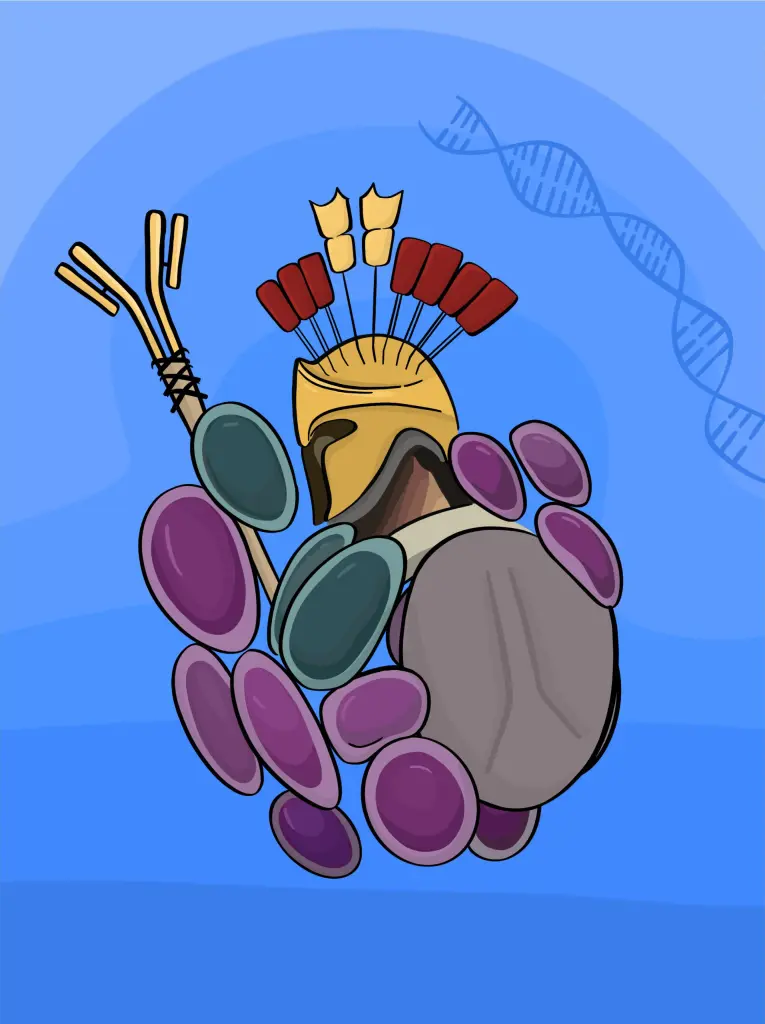
Illustration: The Rise of the Clones by Itay Chen
The article’s cover illustration, titled The Rise of the Clones, was created by Itay Chen, a student in the Rappaport Faculty of Medicine and a professional scientific illustrator. The artwork is competing for a spot on the journal’s cover.
Source – Technion


Researchers from the Ruth and Bruce Rappaport Faculty of Medicine have identified a genetic “fingerprint” that helps predict the effectiveness of these treatments
Considered to be one of the greatest revolutions in cancer treatment, immunotherapy enhances the immune system’s ability to target and destroy cancer cells efficiently. One of the key challenges in immunotherapy is the uncertainty regarding patients’ responses – not all patients respond to the treatment, and some may experience side effects without meaningful therapeutic gain. Therefore, there is a need to identify biomarkers that can predict treatment effectiveness based on individual patient data.
New and promising findings on this topic are now presented in a study by Technion researchers published in the prestigious journal Cell Genomics. The research was led by Prof. Keren Yizhak and Ph.D. student Ofir Shorer from the Rappaport Faculty of Medicine and the Bruce and Ruth Rappaport Cancer Research Center.
Their study is based on a large-scale meta-analysis of single-cell RNA sequencing and T-cell receptor (TCR) sequencing from cancer patients treated with immunotherapy. This allowed them to examine the genetic characteristics of T-cell clones and their influence on treatment success.
Key Terms for Understanding the Research:
The researchers discovered that while these T cell clones exist in both responsive and non-responsive patients, those who respond to immunotherapy exhibit a unique genetic signature within their T cell clones, and immunotherapy enhances their immune activity. Another key finding was that in non-responsive patients, certain T cell clones were simultaneously found both in the tumor and the bloodstream. The researchers concluded that for improved immune response, it is essential to activate T cell clones found only within the tumor, rather than those present in both the tumor and the blood. The approach presented by Technion researchers will improve predictive capabilities and may even lead to new treatment strategies that enhance immunotherapy effectiveness. Additionally, these findings provide a deeper understanding of immune system dynamics and their potential to fight cancer, an idea central to immunotherapy.
Illustration: The Rise of the Clones by Itay Chen
The article’s cover illustration, titled The Rise of the Clones, was created by Itay Chen, a student in the Rappaport Faculty of Medicine and a professional scientific illustrator. The artwork is competing for a spot on the journal’s cover.
Source – Technion
Shorer O, Pinhasi A, Yizhak K. Single-cell meta-analysis of T cells reveals clonal dynamics of response to checkpoint immunotherapy. Cell Genom [Epub ahead of print]. [article]
Related Posts
Novel biosensor uses DNA ‘barcodes’ to uncover disease signals in cells
CellART extracts single-cell information from high-resolution spatial transcriptomics
Cell2space restores spatial context to single-cell RNA sequencing data
Urine test may improve bladder cancer diagnosis and guide treatment decisions
DeCoRE – a computational method to resolve RNA structural heterogeneity from RNA structure probing data by direct RNA sequencing
Tracing 700 million years of cell evolution
How should biological replicates be handled in long-read RNA sequencing?
RNA-Seq reveals a new way the developing heart controls its growth
The Human RNome Project Consortium seeks to publish first-ever complete sequence of the body’s RNA
scFlowReport brings multiple single-cell RNA sequencing analyses into one workflow
Long-read RNA sequencing reveals how neurons choose alternative RNA endings
DeOPUS improves cell-type estimates from bulk RNA sequencing
ResolVI improves accuracy in spatial transcriptomics analysis
RNA sequencing reveals transcriptional allele differences in prostate cancer stem cells
Unmasking “zombie cells” in aging tissue with an AI-powered barcode
RNA variant imaging for cancer diagnosis
Autism-risk mutations reveal two opposing patterns of brain gene activity
A real-data approach to evaluating RNA transcript analysis methods
Detection and sequencing of Ap2N-capped RNAs in human cells
Single-cell RNA sequencing provides a closer look at the Aedes aegypti midgut
Stay Connected
Submit a Post to the Blog
Recent Posts
Subscribe to the RNA-Seq Blog
RNA-Seq Products & Services