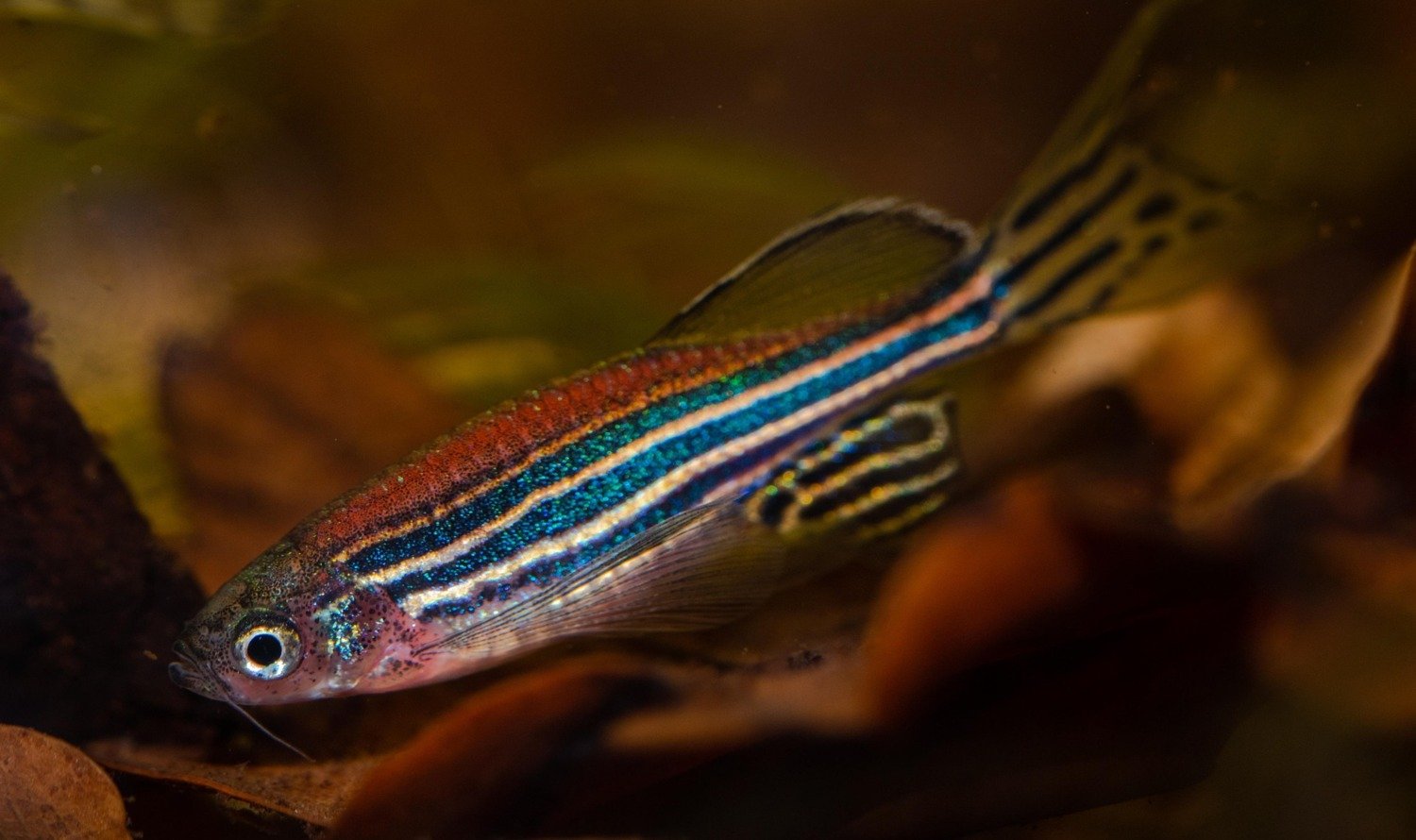
A new study from the Institute of Environmental Medicine at Karolinska Institutet presents a promising method for identifying endocrine-disrupting chemicals – without the need for traditional animal testing. By combining RNA-sequencing of zebrafish embryos with a structured toxicological framework, researchers can now better predict harmful effects on human health.
Chemicals that interfere with the hormone system, known as endocrine disruptors, are linked to a range of health problems. Identifying these substances is a top priority in the EU, but current methods are time-consuming and rely heavily on animal testing. At the same time, the use of omics technologies – such as transcriptomics and genomics – is increasing in toxicology. Despite this, mechanistic omics data are still mainly used as supporting evidence, rather than being fully integrated into risk assessments.
In this study, the researchers sequenced the transcriptomes of zebrafish embryos exposed to two suspected endocrine disruptors. They then analyzed which genes were affected and predicted the biological processes involved. These processes were linked to specific biological events within an Adverse Outcome Pathway (AOP) network – using both an automated, data-driven approach and a manual, expert-driven one, allowing the two methods to be compared.

”Substantial amounts of mechanistic data on toxic effects are generated in academic research, but no one really know how to use that data for risk assessment. There is an urgent need for new methods to start utilizing all this data.” says first author Linus Wiklund, PhD student at the Institute of Environmental Medicine.
The results show how AOP networks can help structure and interpret RNA-sequencing data, making it possible to connect early molecular changes to potential health effects. Both compounds were found to impact pathways related to hormone production or metabolism, and possibly lead to endocrine-related adverse outcomes.
”We need to test the methodology with additional compounds, both known endocrine disruptors and compounds that have no endocrine disrupting properties. By comparing these, we could potentially identify a ‘fingerprint’ for endocrine disrupting properties based on gene expression, and we could use that fingerprint to assess new compounds.” says Linus Wiklund.
The findings could support regulatory decisions on the tested chemicals, but the study also offers something more: a general approach that can help reduce the need for animal testing in toxicology.
Source – Karolinska Institutet


A new study from the Institute of Environmental Medicine at Karolinska Institutet presents a promising method for identifying endocrine-disrupting chemicals – without the need for traditional animal testing. By combining RNA-sequencing of zebrafish embryos with a structured toxicological framework, researchers can now better predict harmful effects on human health.
Chemicals that interfere with the hormone system, known as endocrine disruptors, are linked to a range of health problems. Identifying these substances is a top priority in the EU, but current methods are time-consuming and rely heavily on animal testing. At the same time, the use of omics technologies – such as transcriptomics and genomics – is increasing in toxicology. Despite this, mechanistic omics data are still mainly used as supporting evidence, rather than being fully integrated into risk assessments.
In this study, the researchers sequenced the transcriptomes of zebrafish embryos exposed to two suspected endocrine disruptors. They then analyzed which genes were affected and predicted the biological processes involved. These processes were linked to specific biological events within an Adverse Outcome Pathway (AOP) network – using both an automated, data-driven approach and a manual, expert-driven one, allowing the two methods to be compared.
The results show how AOP networks can help structure and interpret RNA-sequencing data, making it possible to connect early molecular changes to potential health effects. Both compounds were found to impact pathways related to hormone production or metabolism, and possibly lead to endocrine-related adverse outcomes.
The findings could support regulatory decisions on the tested chemicals, but the study also offers something more: a general approach that can help reduce the need for animal testing in toxicology.
Source – Karolinska Institutet
Wiklund L, Wincent E, Beronius A. (2025) Using transcriptomics data and Adverse Outcome Pathway networks to explore endocrine disrupting properties of Cadmium and PCB-126. Environment International 197: 109352. [article]
Related Posts
RNAmel simplifies RNA sequencing data analysis with a reproducible, integrated platform
Heart failure reshapes bone marrow to create inflammation-related immune memory
Overlooked DNA regions surrounding ‘microexons’ hold missing pieces of autism’s genetic puzzle
RiboBA improves detection of hidden protein-coding regions using ribosome profiling
An anti-senescence gene may fight spinal disc deterioration
Scientists identify the neuroblastoma cells that signal poor outcomes
Novel biosensor uses DNA ‘barcodes’ to uncover disease signals in cells
CellART extracts single-cell information from high-resolution spatial transcriptomics
Cell2space restores spatial context to single-cell RNA sequencing data
Urine test may improve bladder cancer diagnosis and guide treatment decisions
DeCoRE – a computational method to resolve RNA structural heterogeneity from RNA structure probing data by direct RNA sequencing
Tracing 700 million years of cell evolution
How should biological replicates be handled in long-read RNA sequencing?
RNA-Seq reveals a new way the developing heart controls its growth
The Human RNome Project Consortium seeks to publish first-ever complete sequence of the body’s RNA
scFlowReport brings multiple single-cell RNA sequencing analyses into one workflow
Long-read RNA sequencing reveals how neurons choose alternative RNA endings
DeOPUS improves cell-type estimates from bulk RNA sequencing
ResolVI improves accuracy in spatial transcriptomics analysis
RNA sequencing reveals transcriptional allele differences in prostate cancer stem cells
Stay Connected
Submit a Post to the Blog
Recent Posts
Subscribe to the RNA-Seq Blog
RNA-Seq Products & Services