Intercepting these molecular and cellular changes may prevent or delay lung cancer development, reducing lung cancer–related mortality.
Throughout a person’s lifetime, the cells lining the respiratory tract are exposed to inhaled pollutants, including cigarette smoke. These exposures can cause molecular changes that disrupt normal cell behavior, leading to abnormal growth and function. Over time, these airway abnormalities—called bronchial premalignant lesions—can progress to a type of non-small cell lung cancer known as squamous cell carcinoma.
In a new study from Boston University Chobanian & Avedisian School of Medicine, researchers have identified a microRNA (miRNA)—a small non-coding RNA that can suppress gene expression—that is overexpressed in lesions that progress in severity. This miRNA reduces the expression of genes involved in immune recognition, potentially enabling abnormal cells to evade detection by the immune system.
They also found that miRNA expression was highest in severe lesions, particularly those that later progressed. High miRNA expression was also associated with lower expression of immune recognition genes, and lesions with elevated miRNA levels showed fewer immune cells in close spatial proximity to the abnormal cells. Together, these findings suggest a mechanism that may promote progression to cancer and highlight a potential therapeutic pathway to target for lung cancer prevention.
“By studying how these lesions change over time in patients at high risk for lung cancer due to age and smoking history, we can begin to understand why some lesions worsen and progress toward cancer while others remain stable or regress. If we can reliably identify and treat the lesions most likely to progress and treat them before invasion occurs, we may be able to reduce lung cancer mortality,” explained corresponding author Jennifer Beane, PhD, associate professor of medicine at the school.
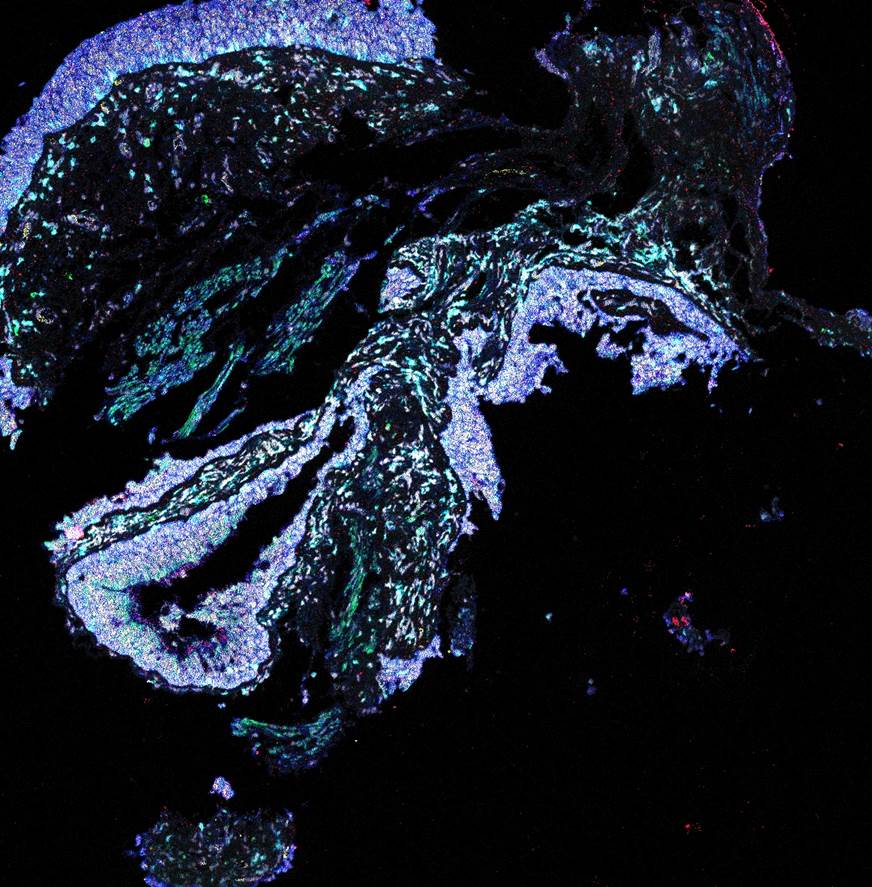
Biopsies of bronchial premalignant lesions were collected from patients using bronchoscopy at Roswell Park Comprehensive Cancer Center in Buffalo, NY. RNA was isolated from each biopsy and profiled using RNA sequencing and miRNA sequencing, which quantify gene and miRNA expression in the tissue sample. In total, the researchers analyzed 167 biopsies from 30 patients. Using computational analyses, they identified a miRNA—miR-149-5p—that was associated with reduced expression of NLRC5, a regulator of genes involved in immune recognition of abnormal cells. To validate these findings, they performed spatial analyses on biopsy tissue to localize airway cell types and to quantify miR-149-5p and its downstream protein targets. These experiments confirmed that miR-149-5p was more abundant and NLRC5 was less abundant in airway epithelial cells from more severe, progressive lesions, and that fewer immune cells were in close proximity to these cells.
The researchers hope this study will help enable new strategies to intercept lung cancer before it develops.
“More broadly, as exposure to inhaled environmental pollutants continues to rise, a detailed understanding of how the respiratory tract responds to—and can potentially recover from—these insults is needed to identify effective ways to prevent or reverse cellular damage,” adds Beane.
Source – Boston University


Intercepting these molecular and cellular changes may prevent or delay lung cancer development, reducing lung cancer–related mortality.
Throughout a person’s lifetime, the cells lining the respiratory tract are exposed to inhaled pollutants, including cigarette smoke. These exposures can cause molecular changes that disrupt normal cell behavior, leading to abnormal growth and function. Over time, these airway abnormalities—called bronchial premalignant lesions—can progress to a type of non-small cell lung cancer known as squamous cell carcinoma.
In a new study from Boston University Chobanian & Avedisian School of Medicine, researchers have identified a microRNA (miRNA)—a small non-coding RNA that can suppress gene expression—that is overexpressed in lesions that progress in severity. This miRNA reduces the expression of genes involved in immune recognition, potentially enabling abnormal cells to evade detection by the immune system.
They also found that miRNA expression was highest in severe lesions, particularly those that later progressed. High miRNA expression was also associated with lower expression of immune recognition genes, and lesions with elevated miRNA levels showed fewer immune cells in close spatial proximity to the abnormal cells. Together, these findings suggest a mechanism that may promote progression to cancer and highlight a potential therapeutic pathway to target for lung cancer prevention.
Biopsies of bronchial premalignant lesions were collected from patients using bronchoscopy at Roswell Park Comprehensive Cancer Center in Buffalo, NY. RNA was isolated from each biopsy and profiled using RNA sequencing and miRNA sequencing, which quantify gene and miRNA expression in the tissue sample. In total, the researchers analyzed 167 biopsies from 30 patients. Using computational analyses, they identified a miRNA—miR-149-5p—that was associated with reduced expression of NLRC5, a regulator of genes involved in immune recognition of abnormal cells. To validate these findings, they performed spatial analyses on biopsy tissue to localize airway cell types and to quantify miR-149-5p and its downstream protein targets. These experiments confirmed that miR-149-5p was more abundant and NLRC5 was less abundant in airway epithelial cells from more severe, progressive lesions, and that fewer immune cells were in close proximity to these cells.
The researchers hope this study will help enable new strategies to intercept lung cancer before it develops.
Source – Boston University
Ning B, Chiu DJ, Pfefferkorn RM, Cullinane E, Kefella Y, Kane E, Reyes-Ortiz V, Liu G, Zhang X, Liu H, Sultan L, Green E, Constant M, Spira AE, Campbell JD, Reid ME, Varelas X, Burks EJ, Lenburg ME, Mazzilli SA, Beane JE. (2026) Up-regulation of an epithelial miRNA is associated with immune evasion in progressive bronchial premalignant lesions. Cancer Immunology Research [Epub ahead of print]. [article]
Related Posts
Scientists identify the neuroblastoma cells that signal poor outcomes
Novel biosensor uses DNA ‘barcodes’ to uncover disease signals in cells
CellART extracts single-cell information from high-resolution spatial transcriptomics
Cell2space restores spatial context to single-cell RNA sequencing data
Urine test may improve bladder cancer diagnosis and guide treatment decisions
DeCoRE – a computational method to resolve RNA structural heterogeneity from RNA structure probing data by direct RNA sequencing
Tracing 700 million years of cell evolution
How should biological replicates be handled in long-read RNA sequencing?
RNA-Seq reveals a new way the developing heart controls its growth
The Human RNome Project Consortium seeks to publish first-ever complete sequence of the body’s RNA
scFlowReport brings multiple single-cell RNA sequencing analyses into one workflow
Long-read RNA sequencing reveals how neurons choose alternative RNA endings
DeOPUS improves cell-type estimates from bulk RNA sequencing
ResolVI improves accuracy in spatial transcriptomics analysis
RNA sequencing reveals transcriptional allele differences in prostate cancer stem cells
Unmasking “zombie cells” in aging tissue with an AI-powered barcode
RNA variant imaging for cancer diagnosis
Autism-risk mutations reveal two opposing patterns of brain gene activity
A real-data approach to evaluating RNA transcript analysis methods
Detection and sequencing of Ap2N-capped RNAs in human cells
Stay Connected
Submit a Post to the Blog
Recent Posts
Subscribe to the RNA-Seq Blog
RNA-Seq Products & Services