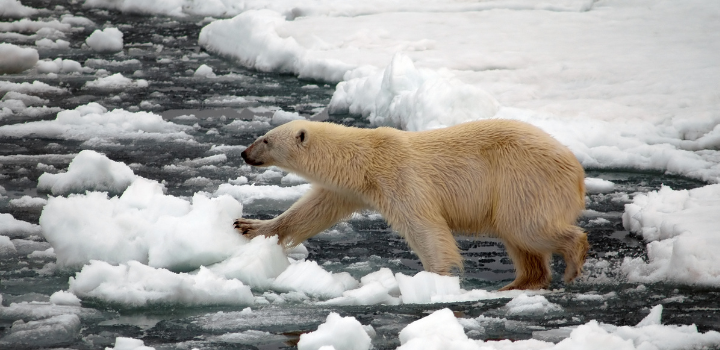
The study by scientists at the University of East Anglia (UEA) discovered that some genes related to heat-stress, aging and metabolism are behaving differently in polar bears living in southeastern Greenland.
New research reveals a link between rising temperatures and changes in polar bear DNA, which may be helping them adapt and survive in increasingly challenging environments.
The study by scientists at the University of East Anglia (UEA) discovered that some genes related to heat-stress, aging and metabolism are behaving differently in polar bears living in southeastern Greenland, suggesting they might be adjusting to their warmer conditions.
The finding suggests that these genes play a key role in how different polar bear populations are adapting or evolving in response to their changing local climates and diets.
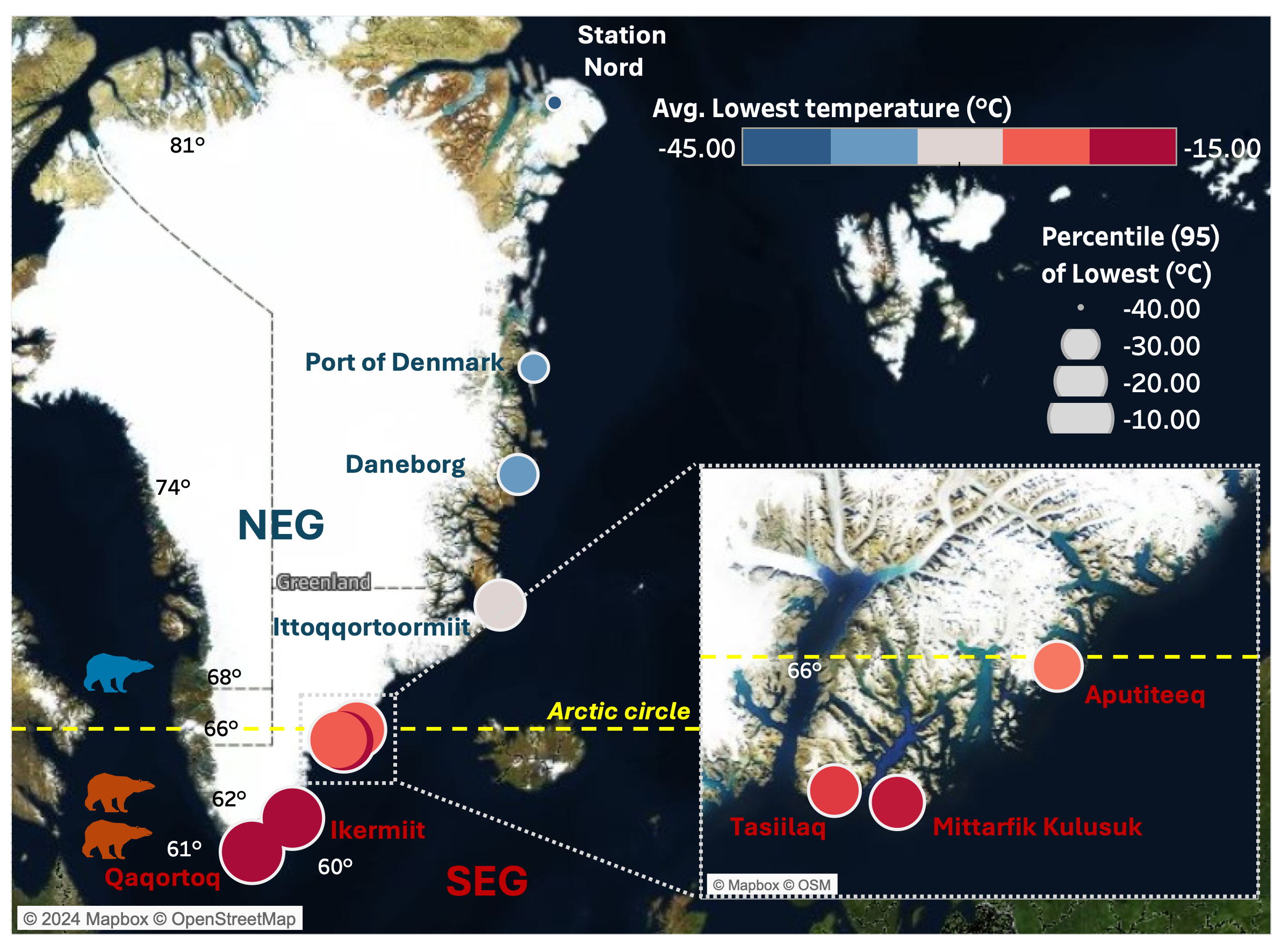
(Figure: Alice Godden and Benjamin Rix)
The authors say understanding these genetic changes is important for guiding future conservation efforts and analysis, enabling us to see how polar bears might survive in a warming world and which populations are most at risk.
It comes as over two-thirds of polar bears are predicted to be extinct by 2050, with total extinction expected by the end of this century. The Arctic Ocean is also at its warmest with temperatures continuing to rise, reducing vital sea ice platforms that the bears use to hunt seals, leading to isolation and food scarcity.
The study, published today in the journal Mobile DNA, analysed blood samples taken from polar bears in northeastern and southeastern Greenland to compare the activity of so-called ‘jumping genes’ - small, mobile pieces of the genome that can influence how other genes work – their relationship with temperatures in the two regions and associated changes in gene expression.
The scientists found that temperatures in northeastern Greenland were colder and less variable, while in the south-east they fluctuated and it was a significantly warmer, less-icy environment, creating many challenges and changes to the habitat there, and one similar to future conditions predicted for the species.
Lead researcher Dr Alice Godden, from UEA’s School of Biological Sciences, cautioned that while the finding offers some “hope” for the polar bears, efforts to limit global temperature increases must continue.
“DNA is the instruction book inside every cell, guiding how an organism grows and develops,” she said. “By comparing these bears’ active genes to local climate data, we found that rising temperatures appear to be driving a dramatic increase in the activity of jumping genes within the southeastern Greenland bears’ DNA.
“Essentially this means that different groups of bears are having different sections of their DNA changed at different rates, and this activity seems linked to their specific environment and climate.
“This finding is important because it shows, for the first time, that a unique group of polar bears in the warmest part of Greenland are using ‘jumping genes’ to rapidly rewrite their own DNA, which might be a desperate survival mechanism against melting sea ice.”
Dr Godden added: “As the rest of the species faces extinction, these specific bears provide a genetic blueprint for how polar bears might be able to adapt quickly to climate change, making their unique genetic code a vital focus for conservation efforts.
“However, we cannot be complacent, this offers some hope but does not mean that polar bears are at any less risk of extinction. We still need to be doing everything we can to reduce global carbon emissions and slow temperature increases.”
Over time our DNA sequence can change and evolve, but environmental stress, such as warmer climates, can accelerate this process. This study is thought to be the first time a statistically significant link has been found between rising temperatures and changing DNA in a wild mammal species.
Changes were also found in gene expression areas of DNA linked to fat processing, which is important when food is scarce and could mean the southeastern bears are slowly adapting to the rougher plant-based diets that can be found in the warmer regions, compared to the mainly fatty, seal-based diets of the northern populations.
“We identified several genetic hotspots where these jumping genes were highly active, with some located in the protein-coding regions of the genome, suggesting that the bears are undergoing rapid, fundamental genetic changes as they adapt to their disappearing sea ice habitat,” said Dr Godden.
The work builds on a previous study by the University of Washington, which discovered the southeastern population of Greenland polar bears was genetically different to the northeastern group, after becoming separated about 200 years ago.
Dr Godden and her colleagues analysed genetic activity data collected for that study from 17 adult polar bears – 12 from northeastern and five from southeastern Greenland.
They used a technique called RNA sequencing to look at RNA expression, the molecules that act like messengers, showing which genes are active. This gave them a detailed picture of gene activity, including the behaviour of jumping genes.
Dr Godden said the next step would be to look at other polar bear populations – there are some 20 sub-populations around the world – adding: “I also hope this work will highlight the urgent need to analyse the genomes of this precious and enigmatic species before it is too late.”
Source – University of East Anglia


The study by scientists at the University of East Anglia (UEA) discovered that some genes related to heat-stress, aging and metabolism are behaving differently in polar bears living in southeastern Greenland.
New research reveals a link between rising temperatures and changes in polar bear DNA, which may be helping them adapt and survive in increasingly challenging environments.
The study by scientists at the University of East Anglia (UEA) discovered that some genes related to heat-stress, aging and metabolism are behaving differently in polar bears living in southeastern Greenland, suggesting they might be adjusting to their warmer conditions.
The finding suggests that these genes play a key role in how different polar bear populations are adapting or evolving in response to their changing local climates and diets.
(Figure: Alice Godden and Benjamin Rix)
The authors say understanding these genetic changes is important for guiding future conservation efforts and analysis, enabling us to see how polar bears might survive in a warming world and which populations are most at risk.
It comes as over two-thirds of polar bears are predicted to be extinct by 2050, with total extinction expected by the end of this century. The Arctic Ocean is also at its warmest with temperatures continuing to rise, reducing vital sea ice platforms that the bears use to hunt seals, leading to isolation and food scarcity.
The study, published today in the journal Mobile DNA, analysed blood samples taken from polar bears in northeastern and southeastern Greenland to compare the activity of so-called ‘jumping genes’ - small, mobile pieces of the genome that can influence how other genes work – their relationship with temperatures in the two regions and associated changes in gene expression.
The scientists found that temperatures in northeastern Greenland were colder and less variable, while in the south-east they fluctuated and it was a significantly warmer, less-icy environment, creating many challenges and changes to the habitat there, and one similar to future conditions predicted for the species.
Lead researcher Dr Alice Godden, from UEA’s School of Biological Sciences, cautioned that while the finding offers some “hope” for the polar bears, efforts to limit global temperature increases must continue.
Over time our DNA sequence can change and evolve, but environmental stress, such as warmer climates, can accelerate this process. This study is thought to be the first time a statistically significant link has been found between rising temperatures and changing DNA in a wild mammal species.
Changes were also found in gene expression areas of DNA linked to fat processing, which is important when food is scarce and could mean the southeastern bears are slowly adapting to the rougher plant-based diets that can be found in the warmer regions, compared to the mainly fatty, seal-based diets of the northern populations.
The work builds on a previous study by the University of Washington, which discovered the southeastern population of Greenland polar bears was genetically different to the northeastern group, after becoming separated about 200 years ago.
Dr Godden and her colleagues analysed genetic activity data collected for that study from 17 adult polar bears – 12 from northeastern and five from southeastern Greenland.
They used a technique called RNA sequencing to look at RNA expression, the molecules that act like messengers, showing which genes are active. This gave them a detailed picture of gene activity, including the behaviour of jumping genes.
Source – University of East Anglia
Godden A, Rix B, Immler S. (2025) Diverging transposon activity among polar bear sub-populations inhabiting different climate zones. Mobile DNA 16(1): 47. [article]
Related Posts
Scientists identify the neuroblastoma cells that signal poor outcomes
Novel biosensor uses DNA ‘barcodes’ to uncover disease signals in cells
CellART extracts single-cell information from high-resolution spatial transcriptomics
Cell2space restores spatial context to single-cell RNA sequencing data
Urine test may improve bladder cancer diagnosis and guide treatment decisions
DeCoRE – a computational method to resolve RNA structural heterogeneity from RNA structure probing data by direct RNA sequencing
Tracing 700 million years of cell evolution
How should biological replicates be handled in long-read RNA sequencing?
RNA-Seq reveals a new way the developing heart controls its growth
The Human RNome Project Consortium seeks to publish first-ever complete sequence of the body’s RNA
scFlowReport brings multiple single-cell RNA sequencing analyses into one workflow
Long-read RNA sequencing reveals how neurons choose alternative RNA endings
DeOPUS improves cell-type estimates from bulk RNA sequencing
ResolVI improves accuracy in spatial transcriptomics analysis
RNA sequencing reveals transcriptional allele differences in prostate cancer stem cells
Unmasking “zombie cells” in aging tissue with an AI-powered barcode
RNA variant imaging for cancer diagnosis
Autism-risk mutations reveal two opposing patterns of brain gene activity
A real-data approach to evaluating RNA transcript analysis methods
Detection and sequencing of Ap2N-capped RNAs in human cells
Stay Connected
Submit a Post to the Blog
Recent Posts
Subscribe to the RNA-Seq Blog
RNA-Seq Products & Services