Investigators in the laboratory of Gemma Carvill, PhD, assistant professor in the Ken and Ruth Davee Department of Neurology Division of Epilepsy/Clinical Neurophysiology, have discovered novel mechanisms underlying Dravet syndrome, a rare genetic form of epilepsy in children, that may serve as promising therapeutic targets, according to findings published in JCI Insight.
Dravet syndrome is a rare, genetic form of epilepsy that begins during infancy and can cause prolonged and frequent seizures and behavioral and developmental delays in children.
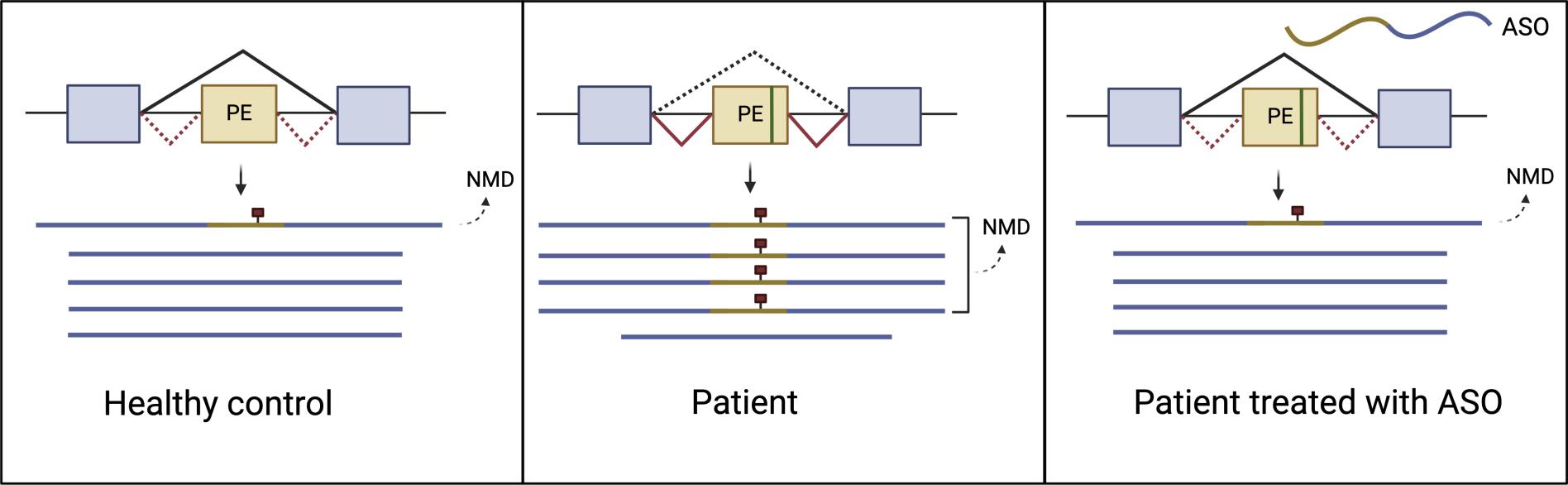
The disorder is caused by genetic variants in the ion channel gene SCN1A that lead to loss of function of the SCN1A protein. Patients typically respond poorly to anti-seizure medication treatments, underscoring the need for new gene-targeting therapies.
“This offers a unique opportunity for therapeutic potential because we have, for most patients, a single target,” said Sheng Tang, MD, PhD, a postdoctoral fellow in the Carvill laboratory and lead author of the study.
In the study, the investigators studied induced pluripotent stem cell (iPSC)-derived neurons from two patients with Dravet syndrome. While the patients had the typical Dravet phenotype, the variants were not in typical regions of the SCN1A gene, as they were found in the introns rather than the exons.
“We think of exons as the important parts that code for proteins and introns as intervening genetic material with unclear impacts on the function of the gene. So that raised the question of why were these intronic regions potentially important, and what’s going on in that area,” Tang said.
Using long-read RNA sequencing to study the iPSC-derived neurons, the scientists identified “poison exons,” or exons that had been alternatively spliced around these intronic SCN1A variants. The presence of these disease-causing variants disrupted poison exon splicing, proper gene expression and protein abundance.
For each patient’s genetic variant, Tang also designed antisense oligonucleotides — short, synthetic DNA strands that bind to and alter RNA or modify protein expression — to target these poison exons and found that they successfully reduced the amount of poison exons in the genetic transcript.
Previous work from the Carvill laboratory identified one of these poison exons in SCN1A and the current findings increase the number of possible therapeutic targets, according to Tang.
“We could potentially target these poison exons as a precision medicine opportunity to try to prevent them being from included in the transcript and prevent that poisoning of the transcript,” Tang said.
Next steps, according to Carvill, also an assistant professor of Pharmacology and of Pediatrics, include applying their approach in human adult brain tissue samples to identify additional poison exons across the genome and in other neurological disorders.
Source – Northwestern University


Investigators in the laboratory of Gemma Carvill, PhD, assistant professor in the Ken and Ruth Davee Department of Neurology Division of Epilepsy/Clinical Neurophysiology, have discovered novel mechanisms underlying Dravet syndrome, a rare genetic form of epilepsy in children, that may serve as promising therapeutic targets, according to findings published in JCI Insight.
Dravet syndrome is a rare, genetic form of epilepsy that begins during infancy and can cause prolonged and frequent seizures and behavioral and developmental delays in children.
The disorder is caused by genetic variants in the ion channel gene SCN1A that lead to loss of function of the SCN1A protein. Patients typically respond poorly to anti-seizure medication treatments, underscoring the need for new gene-targeting therapies.
In the study, the investigators studied induced pluripotent stem cell (iPSC)-derived neurons from two patients with Dravet syndrome. While the patients had the typical Dravet phenotype, the variants were not in typical regions of the SCN1A gene, as they were found in the introns rather than the exons.
Using long-read RNA sequencing to study the iPSC-derived neurons, the scientists identified “poison exons,” or exons that had been alternatively spliced around these intronic SCN1A variants. The presence of these disease-causing variants disrupted poison exon splicing, proper gene expression and protein abundance.
For each patient’s genetic variant, Tang also designed antisense oligonucleotides — short, synthetic DNA strands that bind to and alter RNA or modify protein expression — to target these poison exons and found that they successfully reduced the amount of poison exons in the genetic transcript.
Previous work from the Carvill laboratory identified one of these poison exons in SCN1A and the current findings increase the number of possible therapeutic targets, according to Tang.
Next steps, according to Carvill, also an assistant professor of Pharmacology and of Pediatrics, include applying their approach in human adult brain tissue samples to identify additional poison exons across the genome and in other neurological disorders.
Source – Northwestern University
Tang S, Stamberger H, Calhoun JD, Weckhuysen S, Carvill GL. (2025) Antisense oligonucleotides modulate aberrant inclusion of poison exons in SCN1A-related Dravet syndrome. JCI Insight [Epub ahead of print]. [article]
Related Posts
Novel biosensor uses DNA ‘barcodes’ to uncover disease signals in cells
CellART extracts single-cell information from high-resolution spatial transcriptomics
Cell2space restores spatial context to single-cell RNA sequencing data
Urine test may improve bladder cancer diagnosis and guide treatment decisions
DeCoRE – a computational method to resolve RNA structural heterogeneity from RNA structure probing data by direct RNA sequencing
Tracing 700 million years of cell evolution
How should biological replicates be handled in long-read RNA sequencing?
RNA-Seq reveals a new way the developing heart controls its growth
The Human RNome Project Consortium seeks to publish first-ever complete sequence of the body’s RNA
scFlowReport brings multiple single-cell RNA sequencing analyses into one workflow
Long-read RNA sequencing reveals how neurons choose alternative RNA endings
DeOPUS improves cell-type estimates from bulk RNA sequencing
ResolVI improves accuracy in spatial transcriptomics analysis
RNA sequencing reveals transcriptional allele differences in prostate cancer stem cells
Unmasking “zombie cells” in aging tissue with an AI-powered barcode
RNA variant imaging for cancer diagnosis
Autism-risk mutations reveal two opposing patterns of brain gene activity
A real-data approach to evaluating RNA transcript analysis methods
Detection and sequencing of Ap2N-capped RNAs in human cells
Single-cell RNA sequencing provides a closer look at the Aedes aegypti midgut
Stay Connected
Submit a Post to the Blog
Recent Posts
Subscribe to the RNA-Seq Blog
RNA-Seq Products & Services