Novel technology enables discovery, which could help predict tumor recurrence
Using a new technology and computational method, researchers from Fred Hutch Cancer Center and The University of Texas MD Anderson Cancer Center have uncovered a biomarker capable of accurately predicting outcomes in meningioma brain tumors and breast cancers.
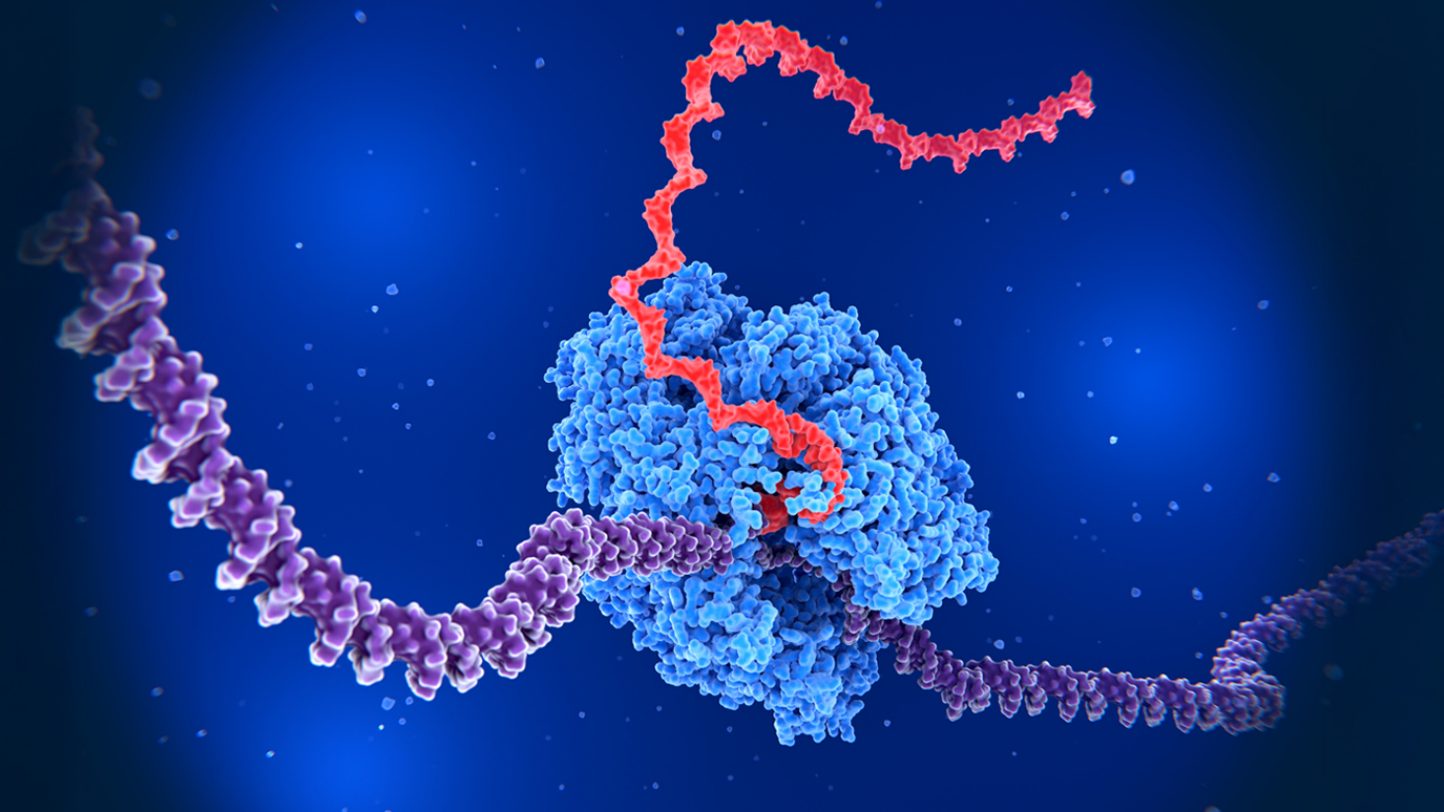
In the study, published today in Science, the researchers discovered that the amount of a specific enzyme, RNA Polymerase II (RNAPII), found on histone genes was associated with tumor aggressiveness and recurrence. The hyper-elevated levels of RNAPII on these histone genes indicate cancer over-proliferation and potentially contribute to chromosomal changes. These findings point to the use of a new genomic technology as a potential cancer diagnostic and prognostic tool, which could improve precision oncology approaches.
“It has been overlooked that histone genes could be a rate-limiting factor in cell replication and, hence, as a strong indicator of tumor cell over-proliferation,” said Ye Zheng, Ph.D., co-first author and assistant professor of Bioinformatics and Computational Biology at MD Anderson. “This is because current RNA sequencing methods are unable to detect histone RNAs due to their unique structure, meaning these libraries have vastly underestimated their presence. Our novel approach, combining a new experimental technology and computational pipeline establishes a comprehensive ecosystem that can leverage biopsy samples from multiple cancer types to enhance tumor diagnosis and prognosis.”
New technology produces better quality data from samples stored over decades
The results of the study were made possible by a new profiling technology developed in the lab of Steven Henikoff, Ph.D., co-first author and professor in the Basic Sciences Division at Fred Hutch, which enables researchers to better study gene expression using formalin-fixed, paraffin-embedded (FFPE) samples.
Tissue biopsies are commonly stored for long-term use as FFPE samples, but the sample RNA becomes increasingly unstable over time due to degradation, leading to potentially lower quality gene expression data.
The new technology – Cleavage Under Targeted Accessible Chromatin (CUTAC) – focuses on small, fragmented DNA non-coding sequences where RNAPII bind located on the same chromosome as the gene they regulate, allowing scientists to directly measure gene transcription activity from the DNA.
When examining clinical samples using CUTAC technology across various cancer types, the researchers found that the expression of histone genes was consistently significantly higher in tumor samples compared to normal tissue samples.
Histone proteins provide essential structural support for DNA in chromosomes, acting as spools around which DNA strands wrap. These proteins have been well studied, but most current tools to study gene expression rely on RNA sequencing. Histone RNA is unique in that its structure prevents them from being detected by current methods.
Thus, the expression of histone genes may be significantly underestimated in tumor samples. The researchers hypothesized that the increased proliferation of cancer cells leads to hypertranscription, or very elevated expression, of histones to meet the added demands of cell replication and division.
RNAPII expression correlates with and predicts cancer aggressiveness
To test their hypothesis, the researchers used CUTAC profiling to examine and map RNAPII, which transcribes DNA into precursors of messenger RNA. They studied 36 FFPE samples from patients with meningioma – a common and benign brain tumor – and used a novel computational approach to integrate this data with nearly 1,300 publicly available clinical data samples and corresponding clinical outcomes.
In tumor samples, the RNAPII enzyme signals found on histone genes was reliably able to distinguish between cancer and normal samples.
RNAPII signals on histone genes also correlated with clinical grades in meningiomas, accurately predicting rapid recurrence as well as the tendency of whole-arm chromosome losses. Using this technology on breast tumor FFPE samples from 13 patients with invasive breast cancer also predicted cancer aggressiveness.
“The technique we developed to examine preserved tumor samples now reveals a previously overlooked mechanism of cancer aggressiveness,” said Henikoff, who is also a Howard Hughes Medical Institute investigator. “Identifying this mechanism suggests it could be a new test to diagnose cancers and possibly treat them.”
Zheng and colleagues plan to use this technology on FFPE samples from multiple cancer types for further validation.
Source – MD Anderson Cancer Center


Novel technology enables discovery, which could help predict tumor recurrence
Using a new technology and computational method, researchers from Fred Hutch Cancer Center and The University of Texas MD Anderson Cancer Center have uncovered a biomarker capable of accurately predicting outcomes in meningioma brain tumors and breast cancers.
In the study, published today in Science, the researchers discovered that the amount of a specific enzyme, RNA Polymerase II (RNAPII), found on histone genes was associated with tumor aggressiveness and recurrence. The hyper-elevated levels of RNAPII on these histone genes indicate cancer over-proliferation and potentially contribute to chromosomal changes. These findings point to the use of a new genomic technology as a potential cancer diagnostic and prognostic tool, which could improve precision oncology approaches.
New technology produces better quality data from samples stored over decades
The results of the study were made possible by a new profiling technology developed in the lab of Steven Henikoff, Ph.D., co-first author and professor in the Basic Sciences Division at Fred Hutch, which enables researchers to better study gene expression using formalin-fixed, paraffin-embedded (FFPE) samples.
Tissue biopsies are commonly stored for long-term use as FFPE samples, but the sample RNA becomes increasingly unstable over time due to degradation, leading to potentially lower quality gene expression data.
The new technology – Cleavage Under Targeted Accessible Chromatin (CUTAC) – focuses on small, fragmented DNA non-coding sequences where RNAPII bind located on the same chromosome as the gene they regulate, allowing scientists to directly measure gene transcription activity from the DNA.
When examining clinical samples using CUTAC technology across various cancer types, the researchers found that the expression of histone genes was consistently significantly higher in tumor samples compared to normal tissue samples.
Histone proteins provide essential structural support for DNA in chromosomes, acting as spools around which DNA strands wrap. These proteins have been well studied, but most current tools to study gene expression rely on RNA sequencing. Histone RNA is unique in that its structure prevents them from being detected by current methods.
Thus, the expression of histone genes may be significantly underestimated in tumor samples. The researchers hypothesized that the increased proliferation of cancer cells leads to hypertranscription, or very elevated expression, of histones to meet the added demands of cell replication and division.
RNAPII expression correlates with and predicts cancer aggressiveness
To test their hypothesis, the researchers used CUTAC profiling to examine and map RNAPII, which transcribes DNA into precursors of messenger RNA. They studied 36 FFPE samples from patients with meningioma – a common and benign brain tumor – and used a novel computational approach to integrate this data with nearly 1,300 publicly available clinical data samples and corresponding clinical outcomes.
In tumor samples, the RNAPII enzyme signals found on histone genes was reliably able to distinguish between cancer and normal samples.
RNAPII signals on histone genes also correlated with clinical grades in meningiomas, accurately predicting rapid recurrence as well as the tendency of whole-arm chromosome losses. Using this technology on breast tumor FFPE samples from 13 patients with invasive breast cancer also predicted cancer aggressiveness.
Zheng and colleagues plan to use this technology on FFPE samples from multiple cancer types for further validation.
Source – MD Anderson Cancer Center
Henikoff S, Zheng Y, Paranal RM, Xu Y, Greene JE, Henikoff JG, Russell ZR, Szulzewsky F, Thirimanne HN, Kugel S, Holland EC, Ahmad K. (2025) RNA polymerase II at histone genes predicts outcome in human cancer. Science 387(6735):737-743. [article]
Related Posts
RNAmel simplifies RNA sequencing data analysis with a reproducible, integrated platform
Heart failure reshapes bone marrow to create inflammation-related immune memory
Overlooked DNA regions surrounding ‘microexons’ hold missing pieces of autism’s genetic puzzle
RiboBA improves detection of hidden protein-coding regions using ribosome profiling
An anti-senescence gene may fight spinal disc deterioration
Scientists identify the neuroblastoma cells that signal poor outcomes
Novel biosensor uses DNA ‘barcodes’ to uncover disease signals in cells
CellART extracts single-cell information from high-resolution spatial transcriptomics
Cell2space restores spatial context to single-cell RNA sequencing data
Urine test may improve bladder cancer diagnosis and guide treatment decisions
DeCoRE – a computational method to resolve RNA structural heterogeneity from RNA structure probing data by direct RNA sequencing
Tracing 700 million years of cell evolution
How should biological replicates be handled in long-read RNA sequencing?
RNA-Seq reveals a new way the developing heart controls its growth
The Human RNome Project Consortium seeks to publish first-ever complete sequence of the body’s RNA
scFlowReport brings multiple single-cell RNA sequencing analyses into one workflow
Long-read RNA sequencing reveals how neurons choose alternative RNA endings
DeOPUS improves cell-type estimates from bulk RNA sequencing
ResolVI improves accuracy in spatial transcriptomics analysis
RNA sequencing reveals transcriptional allele differences in prostate cancer stem cells
Stay Connected
Submit a Post to the Blog
Recent Posts
Subscribe to the RNA-Seq Blog
RNA-Seq Products & Services